Paid Partnership: Life Assure is the paid sponsor of this article. Readers should confirm current monitored medical-alert service availability, coverage, pricing, and eligibility directly with the company. This article includes a paid promotional link to Life Assure. It is provided for general informational purposes only and should not be interpreted as medical advice, emergency-response advice, or a guarantee of any product’s performance.
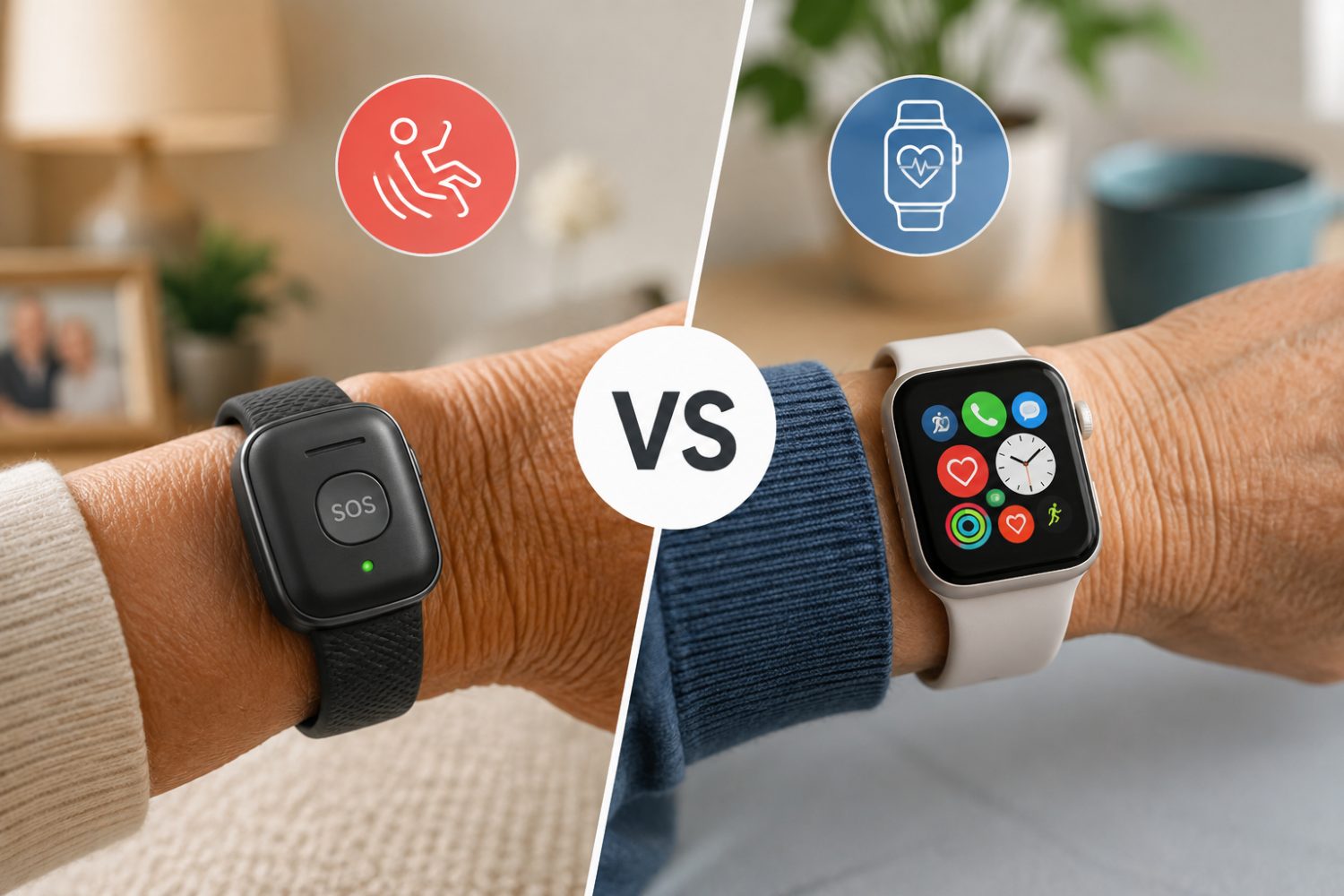
Wearable technology gives older adults more choices than ever when it comes to communication, activity tracking, and personal safety. Some people prefer consumer smartwatch options that combine messaging, fitness tools, apps, and emergency features. Others may prefer dedicated medical-alert devices designed primarily around emergency communication and monitoring.
Although the devices can look similar on the wrist, their connectivity requirements, monitoring services, battery needs, emergency workflows, and available features can differ considerably.
Readers interested in comparing the two categories can review the sponsored Life Assure fall detection watch comparison for additional information.
Life Assure is a Canadian medical-alert provider offering monitoring services to customers in Canada.
Editorial Note: Fall-detection features, monitoring services, cellular coverage, battery life, emergency procedures, subscriptions, compatibility, and product specifications vary by manufacturer and model and may change over time. Consumers should verify current information directly with the applicable manufacturer or service provider.
How Fall Detection Generally Works
Fall-detection systems generally use motion sensors and software to identify movement patterns that may resemble a fall.
Depending on the device, technology may include accelerometers, gyroscopes, GPS, and other motion- or location-related features. The exact combination varies by manufacturer and model.
When a possible fall is detected, some devices provide an audible, visual, or vibration alert and give the wearer an opportunity to cancel it. If the alert is not cancelled, the system may notify a monitoring centre, emergency services, or designated contacts depending on the device, settings, subscription, network connection, and location.
No fall-detection device can identify every fall or completely eliminate false alarms.
Wearables now sit alongside other forms of everyday technology, but devices intended for personal safety should be evaluated differently from products designed primarily for convenience or entertainment.
How Does Smartwatch Fall Detection Differ?
Many consumer smartwatches include fall-detection or emergency-alert features, but availability and operation vary significantly by model.
Some features must be enabled manually. Others depend on the user’s age settings, a paired smartphone, Wi-Fi, cellular connectivity, an active data plan, or other configuration requirements.
Consumer smartwatches also process ordinary exercise and daily movement. Their software therefore has to distinguish possible falls from workouts, sudden movements, and other routine activity.
Detection performance can vary based on the device, software settings, wrist placement, activity, connectivity, and circumstances surrounding a fall. Consumers should review model-specific documentation rather than assuming every smartwatch handles fall detection in the same way.
What Happens After a Possible Fall Is Detected?
This is one of the biggest areas where individual devices and services differ.
A consumer smartwatch may display an emergency prompt, notify designated contacts, contact emergency services, or rely on a paired smartphone or cellular connection. The exact process depends on the manufacturer, device settings, network access, and jurisdiction.
Many subscription-based medical-alert systems take a different approach by connecting an activated alert with a professional monitoring centre.
According to Life Assure, eligible medical-alert products can connect an activated alert with its monitoring service. Consumers should review Life Assure’s current monitoring procedures, product eligibility, service terms, and coverage directly with the company.
Depending on the service plan, account instructions, circumstances, connectivity, and information available to the monitoring agent, the service may attempt to communicate with the wearer and coordinate with listed contacts or emergency responders.
Professional monitoring does not guarantee a specific response time, emergency dispatch, or medical outcome.
A medical-alert system may provide another way to initiate communication after an incident, but it does not prevent falls or replace medical care, emergency planning, or professional evaluation.
Battery Life and Connectivity Matter
Battery life varies substantially across wearable devices. Screen use, GPS activity, cellular connections, battery age, software features, and other settings can all affect how frequently a device needs charging.
Some consumer smartwatches may require daily charging, while some dedicated medical-alert products can operate longer between charges. Even within the same category, however, battery specifications differ.
Consumers should compare the manufacturer’s published battery estimate for the exact model under consideration.
Charging habits matter because a device that is powered off, depleted, or left on a charger cannot provide its intended mobile alert functions.
Connectivity matters too. Depending on the product, emergency features may rely on:
- A paired smartphone
- Wi-Fi
- Built-in cellular connectivity
- GPS
- An active service plan
- Available network coverage
Users should understand these requirements before relying on any wearable as part of an emergency plan.
Similar tradeoffs between battery life, connectivity, and functionality appear across many tech gadgets.
Factors to Consider When Comparing Devices
There is no single wearable that is automatically the right choice for every older adult.
Instead, compare the features against the wearer’s actual needs, habits, technical comfort, location, and preferences.
Important factors include:
- Whether the wearer wants messaging, fitness tracking, apps, or primarily emergency-alert functions
- Whether professional monitoring is available
- Whether monitoring requires a separate subscription
- Whether the device requires a paired smartphone
- Whether it includes its own cellular connectivity
- Published battery life
- Charging frequency
- Screen readability
- Button size and ease of operation
- Speaker and microphone functionality
- GPS or location-sharing features
- Water-resistance limitations
- Caregiver or emergency-contact settings
- False-alarm cancellation procedures
- Cellular coverage where the wearer regularly spends time
- Pricing and recurring service costs
People with mobility concerns, a history of falls, or other health considerations may also want to discuss fall-prevention and emergency-planning needs with a qualified healthcare professional.
Comparing Dedicated Medical-Alert Devices and Smartwatches
Dedicated medical-alert devices generally place greater emphasis on emergency communication and monitoring.
Consumer smartwatches generally combine emergency features with broader functions such as:
- Messaging
- Calling
- Activity tracking
- Fitness applications
- Notifications
- Music
- Navigation
- Other apps
Neither approach is inherently better for every person.
Someone who values a broad range of connected features may prefer a consumer smartwatch. Someone who places a higher priority on a simplified interface and professional monitoring may prefer a dedicated medical-alert system.
The important point is to compare the exact products rather than assuming all devices within either category work the same way.
Key Points for Comparing Fall-Detection Options
- Fall-detection capabilities vary by manufacturer and model.
- No wearable can detect every fall.
- Consumer smartwatches may combine emergency features with fitness, communication, and other applications.
- Dedicated medical-alert products generally emphasize emergency alerts and monitoring.
- Professional monitoring procedures vary by provider and service plan.
- Smartphone, Wi-Fi, cellular, and subscription requirements should be confirmed before purchasing.
- Battery performance varies significantly by individual device and usage.
- A device is only useful when it is powered, connected as required, properly configured, and worn consistently.
Frequently Asked Questions About Fall-Detection Watches
Are Fall-Detection Watches Completely Accurate?
No.
No fall-detection system can identify every possible fall or completely prevent false alarms. Performance can vary based on the device, fit, placement, software settings, activity, connectivity, and circumstances surrounding an incident.
Consumers should review the manufacturer’s published limitations and testing information for the specific device they are considering.
Do Fall-Detection Devices Work Without a Smartphone?
Some do, but requirements vary.
Certain dedicated medical-alert devices contain their own cellular connectivity and may operate without the user’s personal smartphone. Other devices have different requirements.
Consumer smartwatches may require a paired smartphone, Wi-Fi connection, cellular plan, or a combination of these services for certain emergency features.
Confirm the exact connectivity requirements before purchasing.
How Often Do Fall-Detection Watches Need Charging?
Charging frequency depends on the exact model and how it is used.
GPS, cellular connectivity, displays, applications, battery age, and other features can affect battery performance.
Consumers should use the published battery estimate for the specific device rather than relying on a general estimate for all medical-alert watches or smartwatches.
Can a Person Cancel a False Alarm?
Many devices provide a method for cancelling an alert after detecting a possible fall, but the timing and procedure vary by manufacturer.
Wearers and caregivers should review the device instructions in advance so they understand how possible falls and false alarms are handled.
Does Professional Monitoring Guarantee an Ambulance Will Be Sent?
No.
Monitoring procedures depend on the provider, service plan, circumstances, available information, connectivity, and account instructions.
According to Life Assure, its medical-alert systems connect activated alerts with its monitoring service. Consumers should review Life Assure’s current monitoring procedures and service terms directly with the company.
Professional monitoring should not be interpreted as a guarantee of emergency dispatch, response time, or medical outcome.
Choosing Between a Dedicated Medical-Alert Watch and a Smartwatch
A consumer smartwatch can combine communication, fitness tracking, applications, and emergency features in one wearable.
A dedicated medical-alert system generally places greater emphasis on emergency alerts, simplified operation, and monitoring services.
Neither category is automatically right for every older adult.
Before purchasing, compare the exact device’s fall-detection limitations, connectivity requirements, monitoring process, battery performance, cellular coverage, subscriptions, caregiver settings, cancellation procedures, pricing, and ease of use.
Life Assure is the paid sponsor of this article and provides monitored medical-alert services to customers in Canada.
–
Medical and Emergency-Response Disclaimer: This sponsored article is provided for general informational purposes only and is not medical advice, diagnosis, treatment, emergency-response guidance, or a substitute for professional evaluation. Fall-detection and medical-alert devices cannot detect every fall, prevent falls, guarantee contact with a monitoring centre or emergency services, or guarantee a particular medical outcome. Device performance may be affected by fit, placement, movement, battery level, cellular or Wi-Fi coverage, software settings, subscription status, location, and other factors. Anyone with a history of falls, balance concerns, mobility limitations, or medical conditions should discuss fall-prevention and emergency-planning needs with a qualified healthcare professional. In an emergency, users should contact the appropriate local emergency service rather than relying solely on a wearable device or monitoring service.
Advertising and Product Disclaimer: Life Assure is a paid marketing partner of Respect My Region and compensated RMR for publication of this article. Product features, monitoring services, cellular coverage, pricing, subscription terms, battery performance, availability, and other conditions may change. Readers should verify all current product specifications and service terms directly with Life Assure or the applicable manufacturer before purchasing. Respect My Region does not independently test or guarantee Life Assure, any smartwatch, medical-alert product, monitoring response time, fall-detection accuracy, cellular coverage, or emergency outcome.
Last Updated: August 2026