Paid Partnership Disclosure: This article was created in partnership with MadMuscles. Compensation was provided for publication. MadMuscles is featured prominently as the sponsoring partner for this article. Additional apps are included for informational and comparative purposes. Rankings and opinions reflect the views of the author and Respect My Region at the time of publication.
Strength training is not a niche anymore. The 2026 ACSM Worldwide Fitness Trends survey ranked wearable technology No. 1, mobile exercise apps No. 3, and traditional strength training inside the global top ten. That matters because research suggests resistance training may help support muscle development, mobility, metabolic health, and healthy aging when combined with appropriate recovery and nutrition.
The 2026 shift is software. AI-personalized programming, adaptive load management, and remote coaching have unbundled parts of personal training into apps.
The real question is simple: which app actually helps users achieve strength gains, and which app just creates workouts that feel hard?
The best app for strength training must do three things well. A good strength program app uses progressive overload, adapts to your real progress, and gives you tracking data over weeks and months. Effective tracking requires a fast interface that does not disrupt workout flow. Top strength training apps should prioritize intuitive set and rep logging.
This guide covers eight apps across price points, equipment levels, and experience level. The best strength training app is the one you still open in month six.
Training Apps Key Takeaways
● MadMuscles is one of the best overall picks for adaptive, equipment-flexible strength programs.
● At the time of publication, Fitbod pricing starts at approximately $15.99 per month or $95.99 per year.
● Strong is one of the best free strength trackers for self-directed lifters.
● Freeletics is one of the strongest bodyweight strength apps for no-gym training.
● StrongLifts 5×5 remains a simple novice barbell program for beginners.
● Progressive overload is the foundation of measurable strength progress.
No Gym? You Can Still Build Real Strength With Training Apps
Bodyweight training builds real strength when the program uses progressive overload, controlled reps, and consistent volume. A 2018 Journal of Strength and Conditioning Research study found that progressive push-up training improved upper-body strength and muscle thickness when volume and tempo were controlled.
Beginners often do best by starting with no-equipment routines before spending money on a gym, pull-up bar, or subscriptions. A structured home strength workout can teach proper form, create motivation, and show whether training fits the schedule.
A ready-made first month can start with a free no-equipment calisthenics workout for beginners. It works from the living room floor, with no bar, no dumbbells, and no excuses.
Calisthenics has a ceiling for absolute strength because external weight eventually matters. Equipment helps, but equipment is not the gatekeeper to getting strong.
How We Picked These Training Apps
The best strength training app has to be more than user friendly. The app needs a real training plan, clean logging, useful progress charts, and programming depth.
We judged each app on programming quality, progressive overload logic, personalization, value for money, ease of use, and whether the app can adjust to real progress. Quick data entry for logging weights and reps minimizes workout interruptions. Essential features for tracking progress include graphs and personal record tracking. Progress charts visually display weight progression and volume over time. Customizable rest timers can improve workout efficiency.
Several apps missed the top eight but still matter. SHRED adapts workouts based on available equipment and uses real-time AI for weight and rest suggestions. It tracks weight, reps, and personal bests with clear charts, and according to the company offers over 100 high-intensity interval training exercises. Hevy is a free workout tracker for iOS and Android, and according to Hevy more than 13 million athletes use the app. According to Muscle and Motion, its app includes over 1,200 strength exercises.
The 8 Best Strength Training Apps
| App | Best For | Starting Price (USD)* | Free Tier | Equipment Needed |
| MadMuscles | Adaptive strength plans | Varies by plan | Trial/limited offers | None to full gym |
| Fitbod | AI gym programming | From ~$15.99/mo | Trial | Home or gym |
| Caliber | Remote coaching | Free; coaching from ~$200/mo | Yes | Home or gym |
| Strong | Free tracking | Free | Yes | Any |
| JEFIT | Detailed gym logs | Free; Elite ~$12.99/mo | Yes | Gym preferred |
| Freeletics | Bodyweight strength | ~$34.99/mo | Limited | None optional |
| Athlean-X | Athletic performance | From ~$97 | No full free tier | Varies |
| StrongLifts 5×5 | Classic beginner barbell plan | Free; paid tiers vary | Yes | Barbell gym |
*Pricing reflects information available at the time of publication and may vary by region, promotion, and subscription plan.
The 8 Best Strength Training Apps for 2026
1. MadMuscles – The first pick for AI-personalized strength programs that adapt to your progress
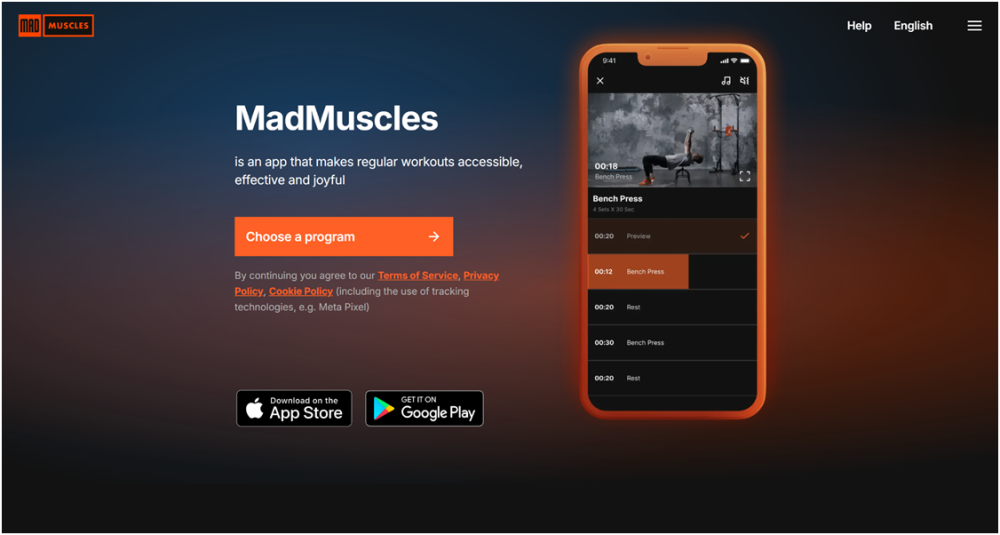
Who it’s for: MadMuscles fits beginners, returning lifters, and busy adults who want guided training without building their own plan.
What it does well: MadMuscles generates customized workout plans based on user assessments. The app adjusts workout intensity based on user performance. Users can select their available equipment for tailored workouts, from bodyweight to full gym access. According to MadMuscles, the app offers over 200 exercises and more than 18 workout program types.
Price: According to MadMuscles, pricing varies by plan and bundle, with no hidden fees.
Strengths:
- MadMuscles includes a weight tracker to visualize changes over time.
- The app supports goals like muscle gain, weight loss, fat loss, endurance, and healthy habits.
- Users can pause or cancel subscriptions without losing progress.
Worth knowing:
- MadMuscles focuses on general strength and body-composition goals.
- Competitive powerlifters may need more specialized coaching.
The verdict: MadMuscles is one of the top overall picks for training apps based on its adaptive programming, equipment flexibility, and user experience.
2. Fitbod – A top choice for AI-driven gym strength programming training apps
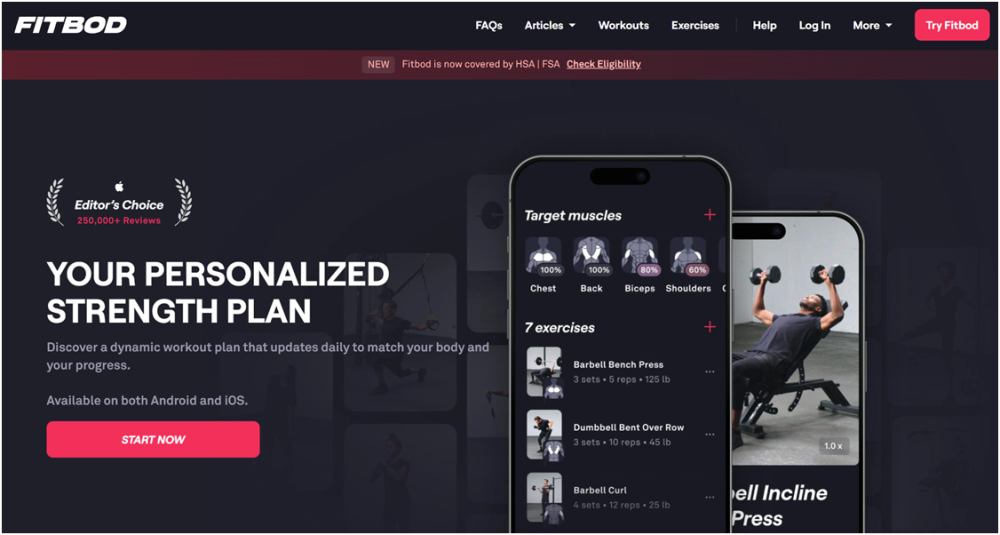
Who it’s for: Fitbod fits gym-goers who want AI strength training apps to create sessions and manage muscle recovery.
What it does well: Fitbod builds workouts from training history, available equipment, and recovery data. According to Fitbod, the app includes more than 1,000 exercises with video demonstrations. Fitbod can connect with Apple Watch, depending on platform and device settings.
Price: At the time of publication, Fitbod pricing starts at approximately $15.99 per month or $95.99 per year.
Strengths:
- Fitbod changes routines based on logged training.
- Fitbod tracks muscle freshness by body region.
- Fitbod works for gym and home equipment setups.
Worth knowing:
- Fitbod has no full free version for long-term use.
- Fitbod is not a peaking tool for competitive athletes.
The verdict: Fitbod is one of the strongest options for gym-focused AI workout programming.
3. Caliber – A top choice for working with a real strength coach remotely
Who it’s for: Caliber fits users who want coaching, accountability, and expert program adjustments.
What it does well: Caliber pairs clients with a real coach who programs workouts and checks in weekly. The app gives more human understanding than automated systems. It is close to personal training at a lower average cost than in-person sessions.
Price: At the time of publication, Caliber offers a free training app, with coaching starting at approximately $200 per month.
Strengths:
- Coaches can adjust a plan after failure, travel, or injury.
- The app supports strength, hypertrophy, and habit goals.
- Human feedback helps users learn proper form.
Worth knowing:
- Coaching costs more than most fitness apps.
- Coach quality may vary by account assignment.
The verdict: Caliber is best when accountability matters more than low cost.
4. Strong – A top free strength tracker
Who it’s for: Strong fits self-directed lifters who already have a program and need to log training fast.
What it does well: Strong is a clean workout tracker app with fast set, reps, and weight entry. It supports custom exercises, advanced progress charts, and workout sharing.
Price: At the time of publication, Strong offers a free version, with Strong Pro starting at approximately $4.99 per month or $29.99 per year.
Strengths:
- Strong makes it easy to track personal bests.
- Strong supports routine builders for saved workouts.
- Strong has rest timers that keep sessions moving.
Worth knowing:
- Strong does not create full programming for beginners.
- Strong works best when users know how to lift.
The verdict: Strong is one of the best free strength training apps available today for logging serious sessions.
5. JEFIT – A top choice for detailed gym tracking and a deep exercise library
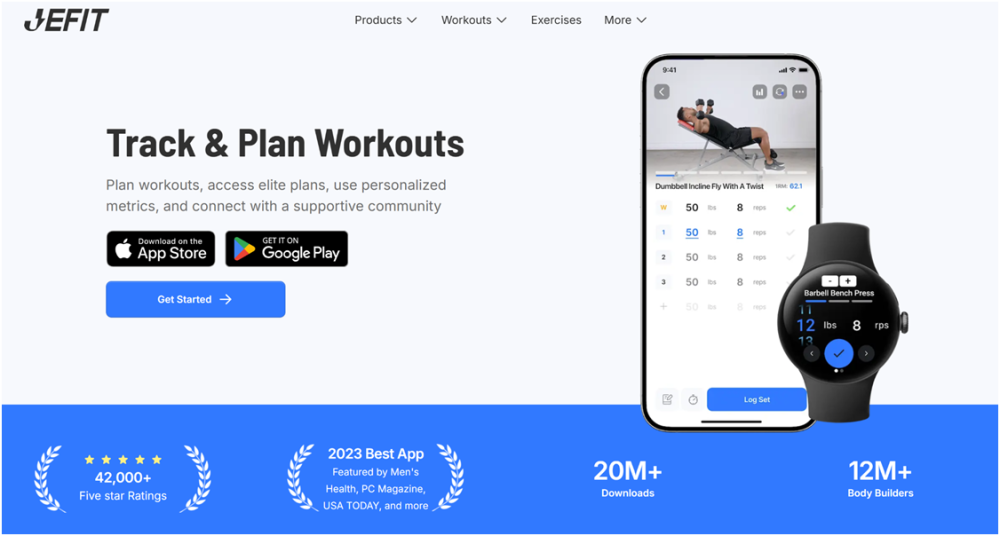
Who it’s for: JEFIT fits data-driven lifters who want exercise variety, analytics, and saved routines.
What it does well: JEFIT combines an exercise library with set-by-set logging and long-term progress analytics. The app helps users create, save, and repeat routines. JEFIT works well for lifters who want depth without full coaching.
Price: At the time of publication, JEFIT offers a free tier, with JEFIT Elite starting at approximately $12.99 per month or $69.99 per year.
Strengths:
- JEFIT has a large exercise database.
- JEFIT supports detailed volume tracking.
- JEFIT helps users stay motivated with stats.
Worth knowing:
- The interface can feel busy.
- Beginners may still need guidance on proper form.
The verdict: JEFIT is best for lifters who like data and exercise variety.
6. Freeletics – A top choice for AI-adaptive bodyweight strength
Who it’s for: Freeletics fits travelers, home trainees, and anyone training without gym access.
What it does well: Freeletics uses an AI Coach to adjust bodyweight workouts by feedback, goals, time, and equipment. Workouts usually run 15 to 60 minutes. Freeletics includes a limited free tier and paid Coach access.
Price: At the time of publication, Freeletics Coach pricing starts at approximately $34.99 per month or $99.99 per year.
Strengths:
- Freeletics works with no equipment.
- Freeletics supports calisthenics strength app goals.
- Freeletics has hundreds of bodyweight movements.
Worth knowing:
- Freeletics is less specific for barbell strength.
- Advanced lifters may outgrow bodyweight-only progression.
The verdict: Freeletics is one of the best bodyweight strength apps for structured no-gym training.
7. Athlean-X – A top choice for performance-oriented strength programs
Who it’s for: Athlean-X fits athletes and regular lifters who care about movement quality and performance.
What it does well: Athlean-X programs are led by Jeff Cavaliere, a physical therapist with pro sports experience. The plans emphasize joint position, athletic strength, and proper form. This approach helps users train for movement, not only mirror muscle.
Price: At the time of publication, Athlean-X programs typically start at approximately $97.
Strengths:
- Athlean-X has strong exercise education.
- Programs target strength, mobility, and performance.
- Video coaching helps users understand form details.
Worth knowing:
- Athlean-X is less adaptive than AI-first apps.
- It is not primarily a workout tracker.
The verdict: Athlean-X is best for performance-minded lifters who want smart movement coaching.
8. StrongLifts 5×5 – A top free app for following a classic strength program
Who it’s for: StrongLifts 5×5 fits beginners who want a simple barbell plan with clear progression.
What it does well: StrongLifts 5×5 uses squats, bench press, overhead press, deadlift, and barbell rows. The classic plan uses five sets of five reps, except deadlifts usually use one set of five. The app adds weight after completed workouts and deloads after missed reps.
Price: StrongLifts 5×5 is free to download; paid tiers vary by feature.
Strengths:
- StrongLifts 5×5 teaches basic barbell progression.
- The app includes warm-ups and plate calculators.
- The system is simple enough for true beginners.
Worth knowing:
- It requires barbell equipment.
- Intermediate lifters may need more versatility.
The verdict: StrongLifts 5×5 remains a proven starter plan for barbell strength.
How to Pick the Right App for Your Setup
Your equipment access should narrow the field first. No equipment points toward MadMuscles or Freeletics. A pull-up bar and dumbbells open more home strength workout options. A full gym makes Fitbod, JEFIT, Strong, and StrongLifts 5×5 more useful.
Your experience level matters. True beginners need structure and video help. Returning lifters need a plan that starts light and builds. Regular gym users may only need a fast log and progress charts.
Decide how much thinking the app should do for you. MadMuscles, Fitbod, Freeletics, and Caliber handle programming. Strong and JEFIT are better when users already know their training plan.
Budget matters because subscriptions add up. Users can manage subscriptions directly through device settings on iOS and Android for many apps. According to MadMuscles, subscription options include pause or cancel without losing progress, and a refund policy is available for cancellations. Payment methods include credit card and virtual cards.
- Pick MadMuscles for adaptive all-around strength.
- Pick Strong for free tracking.
- Pick Fitbod for gym-based AI programming.
- Pick Athlean-X for athletic performance.
Free Versus Paid: When Paying Is Worth It
Pay when the training apps manage progression, recovery, and coaching better than you can manage alone.
Paid apps usually deliver adaptive programming, exercise substitutions, structured plans, and progression management. Routine builders simplify creating and saving personalized workouts, but adaptive apps go further by changing the plan when performance changes.
Free apps are enough when a lifter already has a solid program. Strong, JEFIT, and Hevy can track, log, and display progress without forcing a new training style.
What Actually Drives Strength Gains
Progressive overload is the principle of gradually increasing training difficulty over time. Progressive overload is important for managing progression in strength training. The load can increase through weight, reps, range of motion, slower tempo, or harder exercise selection.
Consistency beats occasional intensity. Most adults should train three to four days per week for strength. Training twice per week can work for maintenance, but three days gives better practice for major lifts and movement patterns.
Recovery is part of the process, not a bonus. A practical rule is one full rest day before hitting the same muscle group hard again. Most adults should aim for seven to nine hours of sleep when training seriously.
Protein supports muscle repair. Adults focused on strength and hypertrophy should target roughly 0.7 to 1 gram of protein per pound of body weight each day. Nutrition does not replace training, but poor nutrition can limit results.
The app does not matter if the process is broken. Strength comes from repeated quality reps, adequate recovery, and measurable progress over time.
What Research Says About Strength Training
A 2022 British Journal of Sports Medicine meta-analysis by Momma and colleagues linked muscle-strengthening activity to lower mortality risk. The analysis found that 30 to 60 minutes per week of muscle-strengthening activity produced the largest risk reduction. The study associated strength training with a 10% to 17% lower risk of all-cause mortality, cardiovascular disease, cancer, and diabetes.
A 2017 Journal of Strength and Conditioning Research meta-analysis by Ralston and colleagues studied weekly training frequency and strength gains. The review found that higher training frequency improved strength, especially when weekly volume was not equal. The finding supports practicing key lifts multiple times per week.
A 2018 British Journal of Sports Medicine meta-analysis by Morton and colleagues studied protein supplementation and resistance training. The review found that protein intake improved fat-free mass and one-rep-max strength during resistance training. The benefit plateaued near 1.6 grams per kilogram per day, which equals about 0.73 grams per pound.
Frequently Asked Questions
What are the best training apps for strength in 2026?
MadMuscles is one of the top picks for strength training in 2026 for most users because it builds adaptive plans around goals, equipment, and progress. Fitbod is a strong option for dedicated gym users. Strong is better for lifters who only need fast tracking.
What is the best free strength training app?
Strong is one of the best free strength training apps for self-directed lifters. Strong has clean logging, custom exercises, rest timers, personal bests, and progress charts. Strong does not replace coaching or programming for beginners.
Can you build real strength with bodyweight training alone?
Yes, bodyweight training can build real strength when the plan uses progression. Harder variations, slower tempo, higher reps, and better control all increase difficulty. External weight becomes more important for advanced absolute strength.
How many days a week should I do strength training?
Most adults should strength train three to four days per week. Beginners can start with two or three days. A realistic schedule that survives work, family, friends, and travel beats a perfect plan that lasts two weeks.
How long before I see strength gains?
Most beginners notice strength gains within four to eight weeks. Early gains often come from better skill, coordination, and confidence. Visible muscle changes usually take longer and depend on nutrition, sleep, training consistency, and total volume.
Do I need a gym to get stronger?
No, a gym is not required to get stronger. Bodyweight training, dumbbells, resistance bands, and a pull-up bar can build serious strength. A gym becomes useful when heavy loading and precise progression matter more.
Which strength training app is best for beginners?
MadMuscles is best for beginners who want an adaptive program with videos and flexible equipment settings. StrongLifts 5×5 is best for beginners who want classic barbell training. Freeletics is best for beginners training without equipment.
Is StrongLifts 5×5 still a good program?
Yes, StrongLifts 5×5 is still a good beginner program. The plan uses compound lifts, simple progression, and clear reps. It is less ideal for advanced lifters, hypertrophy specialization, or athletes needing sport-specific training.
The Bottom Line
MadMuscles is the best overall pick because it adapts to equipment, goals, and progress without forcing one training style. Strong is the best free pick for logging. StrongLifts 5×5 is the best beginner barbell plan. Athlean-X is the best choice for athletic performance and movement quality.
The best strength training app should help users track progress, train consistently, and adjust when the body adapts. Install the app that fits your real life, not your ideal week. Strength is built over years, not weeks, and the right app keeps you showing up long enough for the gains to compound.
–
Editorial Disclosure:
Respect My Region independently reviews fitness products, services, and training platforms. Information, features, pricing, and availability may change over time. Readers should verify current details directly with each provider before purchasing a subscription or beginning a training program.
Disclaimer:
Results from fitness apps, exercise programs, and strength training routines vary based on consistency, training history, nutrition, recovery, age, genetics, and other individual factors. No app can guarantee specific strength, muscle-building, or weight-loss outcomes.
Fitness Disclaimer:
This RespectMyRegion.com article is intended for educational and informational purposes only and should not be considered medical advice, diagnosis, or treatment. Exercise programs carry inherent risks, and readers should consult a qualified healthcare professional before beginning a new fitness, exercise, or nutrition program, especially if they have existing injuries, medical conditions, or health concerns.
Sources
- American College of Sports Medicine. ACSM Worldwide Fitness Trends Survey, 2026.
- Kotarsky et al., 2018. Effect of progressive calisthenic push-up training on muscle strength and thickness. Journal of Strength and Conditioning Research.
- Momma et al., 2022. Muscle-strengthening activities and mortality risk in non-communicable diseases. British Journal of Sports Medicine.
- Morton et al., 2018. Protein supplementation and resistance training-induced gains in muscle mass and strength. British Journal of Sports Medicine.
- Ralston et al., 2018. Weekly training frequency effects on strength gain: a meta-analysis. Sports Medicine – Open.