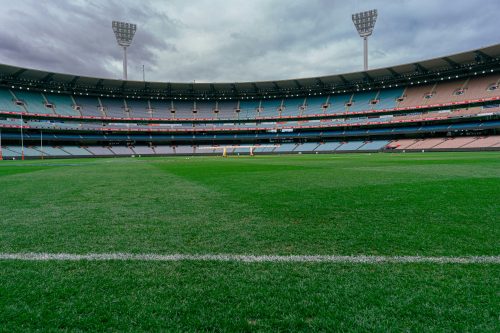
Few stadiums in professional sports are discussed as often as the Seattle Seahawks’ home field when it comes to competitive advantage. The Seahawks stadium, known currently as Lumen Field, has built a reputation as one of the loudest environments in the NFL, but the impact goes beyond fan energy alone. The stadium itself was intentionally designed in ways that influence sound, communication, and game flow.
From architectural decisions to crowd behavior, the combination of design and atmosphere has played a measurable role in how games unfold in Seattle. Here is a breakdown of how the stadium’s construction affects football on the field and why opposing teams consistently describe it as one of the most difficult places to play.
The Seahawks Stadium Was Designed To Amplify Noise
One of the defining elements of Lumen Field is how its structure captures and reflects sound back toward the playing surface. The seating bowl and partial roof are angled in a way that traps crowd noise instead of allowing it to escape upward, concentrating sound toward the field.
Concrete surfaces and aluminum seating also contribute to the effect by causing sound waves to reverberate throughout the stadium rather than dissipating.
This design choice was intentional. When the stadium was built, the organization understood the reputation Seattle fans already had for creating loud environments dating back to the Kingdome era. The new stadium was constructed to take advantage of that existing identity, turning crowd noise into a competitive factor rather than just atmosphere.
Crowd Noise Directly Impacts Offensive Communication
In football, offensive success depends heavily on communication at the line of scrimmage. Quarterbacks must call audibles, linemen must hear snap counts, and timing between players has to remain precise.
At Lumen Field, extreme noise levels can disrupt that process. Crowd volume has historically made it difficult for opposing offenses to hear signals, leading to delay of game penalties, false starts, and general breakdowns in timing.
The impact is not theoretical. Over multiple seasons, visiting teams accumulated a high number of false start penalties in Seattle, a trend commonly linked to communication issues caused by crowd noise.
There have also been individual games where visiting teams committed multiple pre snap penalties attributed directly to the atmosphere created by the crowd.
The Role Of The 12s As A Designed Advantage
Seattle’s fan base, known as the 12s, is often described as a “twelfth player” because of how their noise affects games. The relationship between the Seahawks stadium design and fan behavior is critical. The structure amplifies the noise, but the fans generate it.
Historically, the intensity of Seahawks crowds became so notable that league rules were once adjusted to address excessive crowd noise interfering with play.
The result is an environment where momentum can shift quickly. When the defense is on the field, the crowd becomes louder, increasing pressure on opposing offenses and making communication more difficult in high leverage moments.
Record-Setting Noise And Physical Effects
Lumen Field has produced some of the loudest recorded crowd noise in sports history, reaching more than 137 decibels during a 2013 game.
The noise has even produced measurable physical effects. During the famous “Beast Quake” playoff run by Marshawn Lynch, fan reactions generated seismic activity that could be detected by monitoring equipment, illustrating how crowd movement and stadium vibration can combine in large structures.
While these moments are rare, they demonstrate how stadium design, crowd density, and fan participation intersect in ways that go beyond traditional home field advantage.
Why Design Matters More Than Location Alone
Many NFL stadiums have passionate fans, but not all create the same level of disruption. The difference often comes down to architecture. Open stadiums that allow sound to escape vertically tend to feel less intense on the field even with large crowds.
Lumen Field’s smaller footprint and steep seating angles keep fans closer to the action, increasing perceived volume for players on the field and amplifying defensive energy during critical plays.
This combination of proximity and sound reflection is a major reason why Seattle’s stadium has consistently ranked among the loudest environments in professional football.
The Evolution Of Home Field Advantage
It is important to note that the Seahawks stadium design alone does not guarantee wins. In recent years, analysts have pointed out that home field advantage across the NFL has declined overall, influenced by improved travel conditions, communication technology, and changing game dynamics.
Seattle has experienced fluctuations in home performance as well, reinforcing the idea that atmosphere enhances performance but does not replace execution on the field.
Still, the structural design of Lumen Field continues to provide conditions that can influence games, especially in close matchups where communication and momentum matter most.
The Seattle Seahawks’ stadium represents one of the clearest examples of architecture directly influencing sports performance. Lumen Field was built not just as a venue but as an extension of the team’s identity, turning crowd energy into a strategic advantage.
By combining intentional sound design, steep seating geometry, and one of the most engaged fan bases in professional sports, the stadium creates an environment where noise becomes part of the game itself. While talent and execution ultimately decide outcomes, Seattle’s home field remains a reminder that in football, environment can still shape what happens between the lines.
Stay tuned for more coverage of the Seattle Seahawks via the official RespectMyRegion.com newsletter. Sign up on our home page!