This article is sponsored by 1First Cash Advance. Respect My Region received compensation for this placement. All opinions and editorial perspectives are independent.*
So, you’ve decided to record your first rap album. But where do you even start, and what will you need to turn the idea into a full-fledged project? Will everything really come together on its own? Or will a super offer suddenly appear, and a “cool producer” take charge of your development?
Many people would love to have that very “magic formula” that would lead to the perfect sound and a bright debut. Unfortunately, it doesn’t exist. If everything were that simple, major labels wouldn’t lose money and shut down.
Setting a Clear Direction Before Recording Your Album
Recording an album is expensive, and many artists believe they can save money by creating rap tracks using AI. In fact, modern technology makes it possible to generate music, vocals, and the final sound, and even to legally register authorship. But in reality, this is not a “success button”: it requires skills, paid tools, and an understanding of how to work with these technologies properly. On top of that, listeners still look for real emotions, ideas, and sincerity in music.
But going into the studio without a clear understanding of your tracks is a bad idea. If the songs are not connected and sound like a collection of random pieces, it’s immediately noticeable. You don’t need a complex concept like Kanye West’s My Beautiful Dark Twisted Fantasy with a massive budget. But an album should at least have a shared idea or mood.
Choosing Where and How to Record Your Music
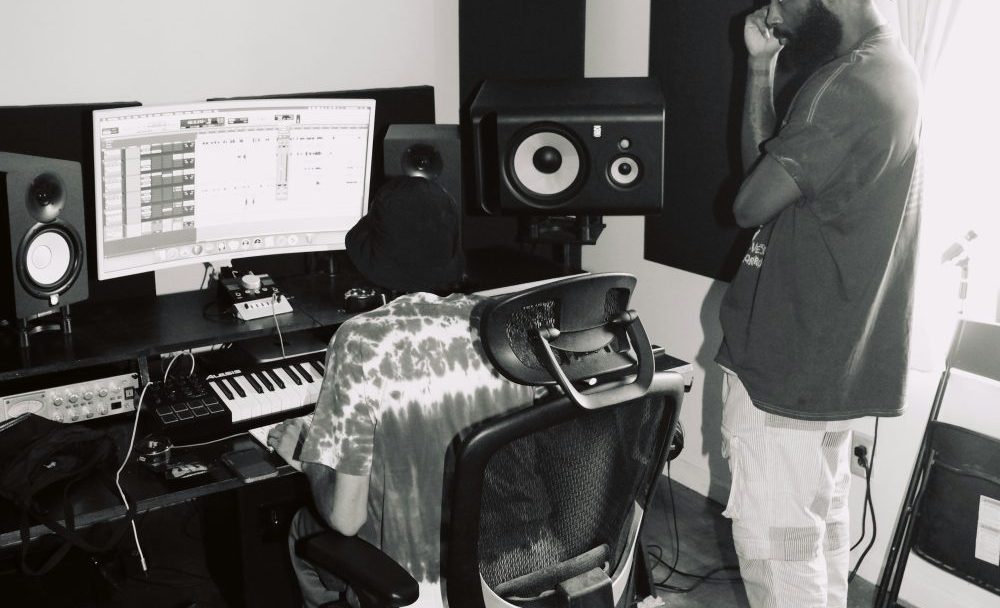
You can record tracks either in a studio or at home. Of course, there is a wide range of affordable software and equipment that allow you to do everything at home, but until you have studio experience and know how to handle this equipment properly, the sound quality will not be the best. For this reason, renting a studio is often unavoidable.
You don’t necessarily have to go to the same studios where your favorite rap artists recorded. Most likely, there are several decent studios in your area. You just need to take the time to research them properly. Listen to songs and albums recorded at these studios and decide whether their sound matches your personal quality standards.
Traditionally, studios charge by the hour, usually between $50 and $150, although more expensive options do exist. Some studios also offer day rates, so if you want to save money, you need to understand in advance how much time recording your material will take.
Beats, Instrumentals, and Finding Your Sound
In rap music, the instrumental sets the foundation for the entire track. To keep early expenses lower, many artists choose to lease beats. This approach works, but it does come with certain restrictions. If you want to release a track without limits, make money from it, and avoid issues later on, buying exclusive rights is usually the better move. It costs more, but it gives you complete control over how your music is used.
Beat prices don’t follow a fixed rule. On BeatStars, a basic license typically starts around $29.99. More advanced options, such as WAV files, individual stems, or unlimited usage, are priced higher. Exclusive beats can cost significantly more, with producers charging hundreds or even thousands of dollars, based on how popular the beat is and the producer’s track record.
The legal side matters just as much. In the United States, copyright ownership must be transferred through a written, signed agreement. Even when things seem fine at first, avoiding a contract can create problems later. Having the right paperwork in place helps protect you if a producer flags your track through YouTube Content ID or disputes your right to release it.
Recording Vocals That Sound Professional
No matter how powerful the beat is, it won’t save a track if the vocals are poor. In rap, the voice is the foundation, and it has to sound clean and confident. Recording a song in a single take is almost impossible, since multiple passes are usually needed: the main vocal, background vocals, ad-libs, and other parts. On average, recording one song takes 2–4 hours of studio time, which typically costs around $100–600 depending on the studio’s rates.
Editing is the next step. No matter how skilled the artist is, a track usually needs timing correction, noise cleanup, and comping the best parts from several takes. This work costs about $30–75 per hour or $50–150 per track. If you skip this stage, fixing problems later will usually cost more.
A useful reminder comes from Russ, who has built a reputation around doing many parts of the process himself: “The best marketing is always going to be good music.” Clean vocals are part of “good music,” especially in rap, where the voice is the product.
Polishing the Tracks Without Losing the Vibe
Mixing and mastering are two completely different processes. The person responsible for mixing takes all the recorded tracks, selects the best takes, combines them into a single mix, and works to make them sound as good as possible by making adjustments, balancing levels, and adding effects such as compression and reverb. The mastering engineer then takes all the finished mixes and turns them into a cohesive album: they balance the volume between songs, find the right dynamic range, add pauses between tracks, and prepare the album for release.
Mixing and mastering are usually priced per song. Mixing typically costs $150–$400 per track. Mastering also costs $150–$400 per track. If you want your album to sound professional, it’s recommended to do both.
Since a ten-song album costs $1,200–$6,600, financing for independent musicians makes it possible to avoid sacrificing quality during mixing and mastering. These two stages are inseparable; without them, achieving a professional sound is impossible. They affect how a track is perceived, its quality, commercial potential, and readiness for release.
Album Artwork and the Story People See First
Before a listener presses the “play” button, they see your album cover. Even though we’re often told not to judge a book by its cover, we all still do. Attractive packaging makes consumers assume the product inside is high-quality. On top of that, the cover can appear everywhere and repeatedly catch people’s attention. A consistent visual style is what makes your artwork stand out. A few years ago, Kanye West achieved this with his series of free tracks released under the name “GOOD Fridays.” All the covers followed the same muted color palette and featured bold red typography.
That’s why the role of a designer or visual artist should not be ignored. Their services usually cost between $100 and $500, and more experienced professionals charge even more.
Another important reason to work with a designer is that streaming platforms have strict technical requirements that professionals take into account when creating album artwork. For example, Spotify requires:
- TIFF, PNG, or JPG file format;
- a 1:1 aspect ratio;
- match the sRGB profile;
- a resolution between 640 and 10,000 pixels on each side.
In addition, trying to save money by using unlicensed images can result in a track or even an entire release being removed for copyright infringement. Original artwork helps protect your project.
Putting the Album Out Into the World
When the album is ready, it needs to be uploaded through a distributor. These services publish music on Spotify, Apple Music, Tidal, and other platforms, and each one has its own pricing.
DistroKid’s annual subscription for one artist starts at $24.99. TuneCore offers unlimited plans starting at $22.99 per year, as well as pay-per-release options — releasing an album costs $39.99. CD Baby uses a one-time payment model: $9.99 for a single and $14.99 for an album, with no subscription fees.
Why the Work Comes Long Before the Payoff
Creating an album with 10 tracks is expensive. Even the most basic option using leased beats costs around $5,000, while a full project can easily reach $18,000 or more. Income does not come immediately; the tracks need to gain streams.
It’s also important to understand that Spotify does not pay a fixed amount. Earnings depend on your share of total streams and the terms of your agreements with a label, publisher, or distributor.
To understand the scale, the Billboard formula is enough: 1250 paid subscription audio streams count as one “album,” and 3750 ad-supported streams also count as one unit. These numbers show why an album rarely pays off right away, especially if the artist funded the recording themselves.
That is why many independent musicians treat their first album as an investment. Chance the Rapper said it directly: “It’s a gamble. I have to really bet on myself, which is why I’m always broke.” And that is usually how it works: first, you spend money on creating and releasing the album, and only then do you wait for streams to start generating income.
–
Sponsored Content Notice
This RespectMyRegion.com content was produced in partnership with 1First Cash Advance. Sponsorship does not influence editorial integrity or recommendations.
Financial Disclaimer
This article is for informational and educational purposes only and does not constitute financial advice. Readers should conduct their own research and consult qualified professionals before making financial decisions.
Eligibility & Terms Notice
Loan availability, terms, fees, and approval requirements vary by lender and jurisdiction. Not all applicants will qualify.