Two products can have similar prices and create completely different workflows. Compressed coco may save storage space before use, but the cultivation team still needs to expand it, hydrate it, break it apart and place it into containers. Loose coco removes the expansion step, but workers may still need to mix, measure and fill hundreds or thousands of pots or grow bags.
Growing media has a price, but getting that media into a cultivation room and ready for plants has a much larger cost. Commercial operators also pay for the labor required to receive, move, hydrate, mix, fill, stage and clean up that media. They pay for the water and equipment involved. They pay for the floor space it occupies and every hour a flowering room sits empty between cycles.
That complete workflow was the focus of the latest Respect My Region Podcast conversation between host Joey Brabo and Rx Green Technologies CEO Gary Santo.
Instead of treating Ready-to-Use grow bags as another product pitch, the episode examined how RTUs compare with loose coco, compressed coco, soil-based media and rockwool when cultivators account for the entire deployment process.
For owners, CFOs, operations teams and head growers, the real question is not simply, “How much does each bag cost?”
The better question is, “How much does it cost to get each plant site ready?”
Cultivation Media Has a Deployment Cost
Soil-based media can introduce its own requirements depending on how the facility blends, stores and deploys it. Rockwool arrives in a much different physical format, but its irrigation demands and narrow margin for error can require tighter control after planting.
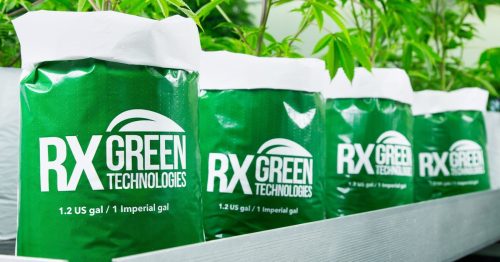
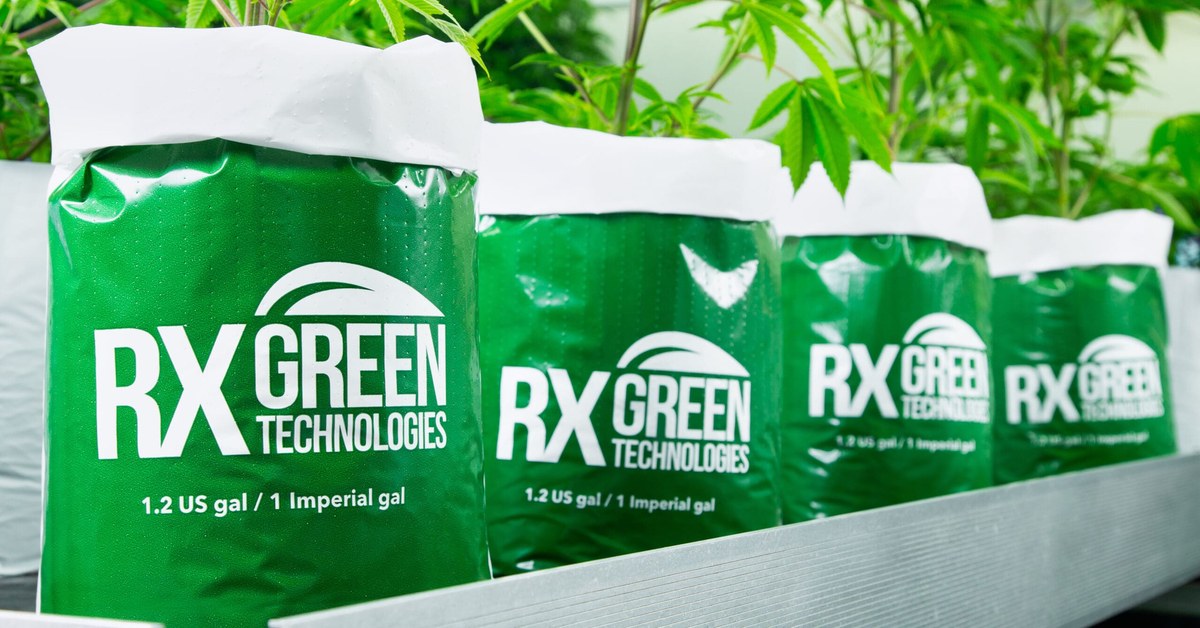
Rx Green’s Ready-to-Use bags arrive prefilled with loose, buffered coco. The company offers them in 1.2-gallon and 2-gallon sizes with either 100 percent coco or a 70/30 coco-perlite blend. Its official Ready-to-Use coco grow bag page describes the deployment process as “Rip. Roll. Plant. Grow.”
The simplicity matters because deployment time is not free.
Every employee hydrating blocks, filling containers or cleaning spilled media represents labor that must eventually be recovered through the value of the finished crop. Every additional day between harvest and the next planting delays the revenue attached to that room.
Respect My Region has previously covered how cultivation facility design can create efficiency or production bottlenecks. Growing media deployment belongs in that same operational conversation. A room cannot produce cannabis while it is waiting to be cleaned, staged or planted.
Gary Santo Says One Team Planted a Room in 15 Minutes
During the episode, Santo described watching a four-person team use Rx Green RTUs during a facility trial. According to Santo, the crew planted the entire room in approximately 15 minutes.
That does not mean every facility will achieve the same number. Room size, plant count, irrigation design, staffing, tables and operating procedures will all affect the result. The example does, however, show what cultivators should measure during a side-by-side trial.
How many people were required? How long did deployment take? How much cleanup followed? When was the room ready for irrigation?
Santo summarized the comparison by saying Rx Green has a time-lapse showing its team planting an entire room in the time required for a compressed block to expand.
The advantage is not that compressed coco cannot grow excellent cannabis. It is that compression adds steps before the plant reaches its final container.
With the RTU, the worker tears the bag at the perforation, rolls down the top, places the emitters, plants and irrigates. The coco is already loose and fluffed inside the bag, so the team can immediately see what it is working with.
The official product design includes a larger gusset for stability, microperforations for airflow and strategically placed drainage holes. Those drainage holes are only partially punched, or what Santo jokingly described as a “little hanging chad,” so the coco stays inside during shipping and room setup.
It is a small detail, but small details become large expenses when repeated across thousands of plant sites.
Ready-to-Use Does Not Mean Cultivators Stop Measuring
Removing preparation steps does not eliminate the need for technical judgment. Rx Green provides batch information so growers can see the starting pH and EC of the media. Santo explained that the COA helps the cultivation team decide whether it can move directly from emitter placement into planting or whether its irrigation strategy requires an adjustment first.
The company says its coco is tested for pH, EC, mineral content, heavy metals, pesticide residue and microbials. Its current product information also states that batches are checked at their source, after arriving at the company’s U.S. facility and before shipping to cultivators.
Rx Green’s own RTU hydration guide still instructs cultivators to irrigate the bags and check runoff pH and EC. That distinction is important. Ready-to-Use does not mean dry coco never needs water. It means the media does not require a separate expansion, mixing and container-filling process before it can be staged and irrigated at the plant site.
The COA provides a known starting point. The cultivation team remains responsible for how that starting point fits its genetics, water source, nutrients, irrigation frequency and environmental conditions.
Rockwool “Doesn’t Suffer Fools”
One of Santo’s sharpest comments during the conversation came during the comparison between rockwool and coco. “Rockwool doesn’t suffer fools,” he said. “You get out what you put in.”
Rockwool can support highly precise crop steering, but that precision leaves less room for mistakes involving irrigation timing, feed strength, root-zone conditions or environmental management. When the program is dialed in, the results can be excellent. When it is not, the crop can respond quickly.
Coco offers a different relationship between water retention, aeration and irrigation control. That does not make coco automatic or mistake-proof. Growers still need to understand drybacks, root-zone EC, runoff, cultivar demand and the physical characteristics of the media.
The choice should be based on the facility and the team operating it.
A grow with experienced crop steerers, advanced irrigation controls and genetics proven in rockwool may have no reason to change. Another facility may value the flexibility of coco, the physical structure of a coco-perlite blend or the labor reduction associated with prefilled RTUs.
The point is not that one medium wins every comparison. The point is that every medium creates a different combination of labor, risk, equipment, storage and technical demands.
Pure Coco Versus a 70/30 Coco-Perlite Blend
The episode also addressed the difference between pure coco and coco mixed with perlite. Rx Green offers both 100 percent buffered coco and a blend containing 70 percent coco with 30 percent coarse perlite.
Pure coco may provide the water-holding behavior and root-zone structure a particular cultivation team already understands. Adding coarse perlite changes the media’s physical composition, potentially increasing drainage and air space while changing how quickly the container dries.
That does not make one formula universally better.
Container size, plant size, irrigation frequency, environmental demand and cultivar behavior all affect which blend makes sense. A facility running high-frequency fertigation may want something different from a team using fewer, larger irrigation events.
Consistency becomes especially important at scale. If workers hand-mix loose coco and perlite, the actual ratio can change from one container to another. A premixed RTU can remove that mixing step and give the room a more uniform physical starting point.
That uniformity matters because sensor readings and irrigation schedules are only as useful as the media they are supposed to represent.
Gary Santo Does Not Want to Promise Higher Yields With Grow Bags
The easiest way to market a cultivation input is to promise more yield. Santo wants to take a different approach.
“I don’t like us going out and making claims that use our nutrients, use our coco, it’s going to improve your yields,” he said during the episode. “Everybody says that.”
Instead, Santo said he prefers to share the COAs from flower grown with Rx Green products and provide the nutrient recipe used during the run.
The facility behind those results was not presented as a brand-new, state-of-the-art cultivation campus built with unlimited money. Santo described it as a competent, approximately 10,000-square-foot grow that was more than a decade old.
His message to experienced cultivators was direct: here is what Rx Green used, and here is the resulting data.
“You should be able to do this or better than we did it,” Santo said.
That is a more useful framework than pretending a substrate can overcome weak genetics, poor environmental control, irrigation mistakes or inconsistent execution.
“Coco is coco at the end of the day,” Santo added.
The value has to come from what surrounds the coco: processing, buffering, testing, bag design, batch consistency, technical support, deployment efficiency and whether the product fits the facility’s operating system.
Premium Flower and Affordable Cannabis Require Different Math
Operational efficiency also depends on what the company intends to sell. A facility producing limited, high-end flower may accept higher labor and production costs if the finished product consistently commands a premium. An operator producing reliable, affordable cannabis at scale may need a different balance between quality, throughput and cost per pound.
The problem is that consumers do not always understand why one jar costs substantially more than another.
They see two packages of flower. They may not see the genetics, labor, failure risk, environmental control, testing, handwork and production time behind them.
Cultivators still have to make the math work.
A company cannot build every room like a boutique project and expect the flower to compete on value. It also cannot remove every cost and assume the finished product will retain premium quality.
The intended customer, product tier, genetics, cultivation strategy and production budget need to support each other.
The Numbers Cultivators Should Measure During an RTU Grow Bag Trial
A meaningful comparison should document the entire workflow, not just the purchase order.
Commercial operators evaluating RTUs should measure:
- Delivered media cost per plant site
- Freight and storage requirements
- Number of workers required for deployment
- Total labor hours
- Water used before planting
- Equipment required for hydration or mixing
- Time spent filling containers
- Cleanup time and waste
- Time from room reset to planting
- Starting pH and EC
- Moisture consistency between bags
- Irrigation behavior and dryback
- Root-zone uniformity
- Usable yield
- Finished product quality
- Total production cost per pound
A small controlled trial can produce those numbers without forcing the facility to change every room at once.
The most important comparison is not RTU versus compressed coco in theory. It is how each option performs inside the same facility, with comparable genetics, plant counts, environmental conditions and production goals.
Ready-to-Use Is Ultimately a Business Decision
Rx Green’s Ready-to-Use grow bags are not being positioned as a shortcut around cultivation skill. The argument is operational.
If a facility can reduce media preparation, use fewer labor hours, eliminate container filling, shorten cleanup and plant rooms sooner, those savings can be measured. If the RTUs also produce a consistent root-zone starting point, the cultivation team gains another variable it may be able to control more effectively.
That value will look different inside every facility.
A small grow may care most about reducing the number of people required for room turnover. A larger multi-room operation may focus on standardization and repeatability. A CFO may want the true cost per plant. A head grower may care more about moisture consistency, drybacks and how quickly the media responds after irrigation.
That is why price per bag is only the beginning of the conversation.
Watch the full Respect My Region Podcast episode, Beyond Price Per Bag: The Business Impact of Rx Green Ready-to-Use Grow Bags, for Joey Brabo’s complete conversation with Gary Santo.
Cultivators interested in reviewing the RTU specifications, pure coco option or 70/30 coco-perlite blend can learn more through Rx Green Technologies.
Cannabis laws vary by jurisdiction. This content is intended for licensed industry professionals and adults 21 and older. Nothing in this article guarantees cultivation, yield, compliance or financial results.