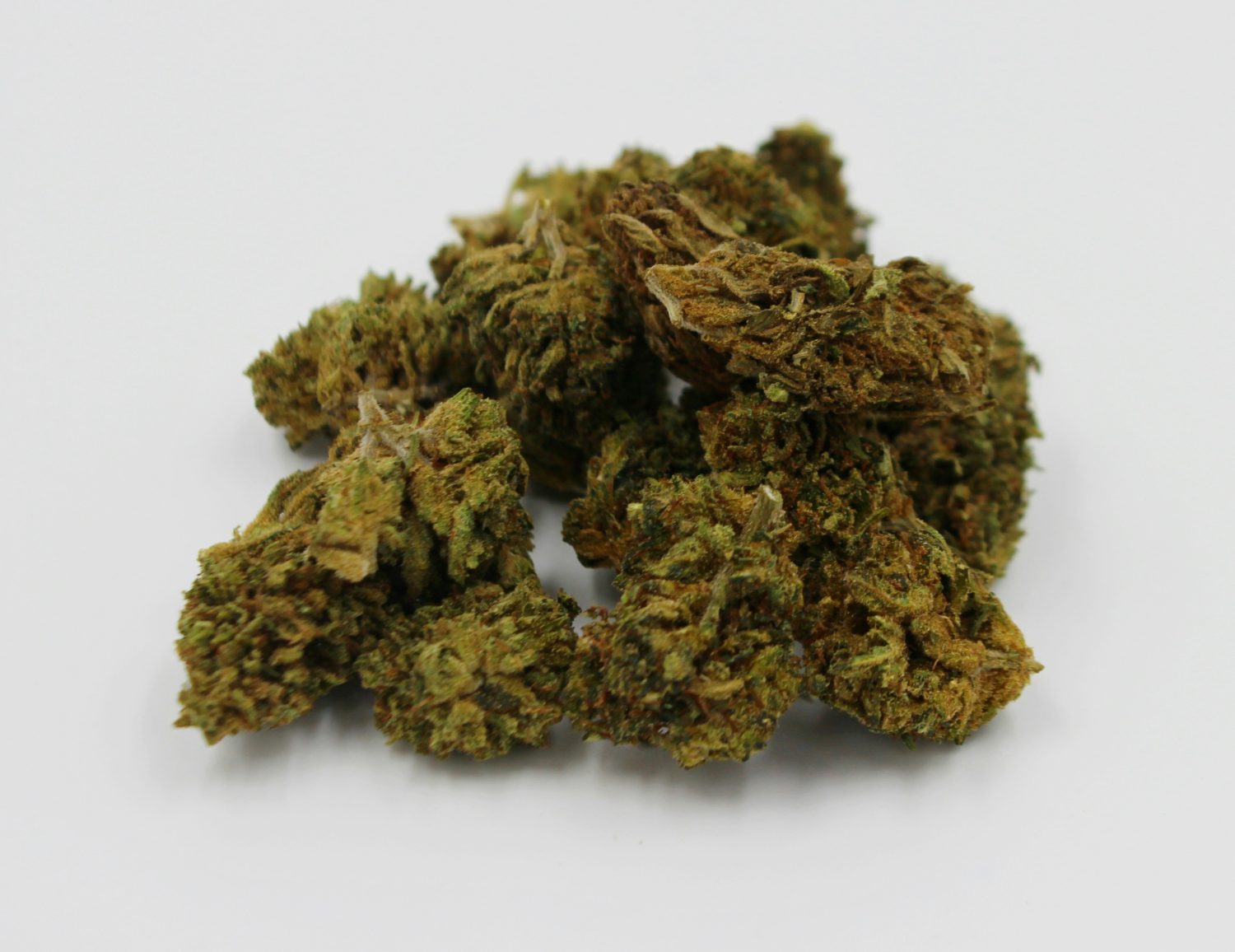
Walk into smoke shops, CBD stores, and even some dispensaries across the country right now and you’re seeing the same thing show up more and more, THCA flower sitting in jars that look, smell, and break down exactly like traditional cannabis.
For a lot of consumers, there’s no real difference once it’s lit. But the label says hemp, and that distinction has created one of the most controversial and fastest growing segments in the entire cannabis industry.
This isn’t just another cannabinoid trend. This is what happens when federal law, plant science, and real market demand don’t fully line up.
THCA, tetrahydrocannabinolic acid, is the raw form of THC found in cannabis before heat is applied.
On its own, THCA isn’t psychoactive. But once it’s exposed to heat through smoking, vaping, or cooking, it converts into THC through decarboxylation.
That’s the same THC people have always associated with getting high. So when someone buys THCA flower and smokes it, the end experience is effectively the same as traditional cannabis.
That’s the foundation of the entire category.
The Law Didn’t Account For How The Plant Actually Works
This all traces back to the Agriculture Improvement Act of 2018, which federally legalized hemp by defining it as cannabis containing no more than 0.3% Delta-9 THC by dry weight.
At the time, the focus was squarely on CBD. Lawmakers were thinking about non intoxicating products, not smokable flower that could convert into THC after purchase.
But cannabis plants don’t naturally produce Delta-9 THC in large amounts before harvest. They produce THCA.
That distinction created a gap between how the law is written and how the plant actually behaves. And that gap is where THCA lives.
How The Testing Loophole Actually Works
This is where things move from theory into real business. Hemp is typically tested before harvest to determine compliance. At that stage, Delta-9 THC levels can still fall below the 0.3% threshold, even if the plant is loaded with THCA.
After harvest, drying, curing, and eventual consumption, that THCA converts into THC.
So a product can technically pass compliance testing as hemp, while still delivering a high THC experience when used.
That’s not an accident. Growers have gotten better at dialing in genetics that hit those testing windows while still producing potent flower. But it’s also why regulators are starting to push back.
A lot of brands market THCA as fully legal cannabis. That’s not the full picture.
Federal law specifically defines hemp based on Delta-9 THC, but agencies like the Drug Enforcement Administration have made it clear that total THC, including THCA after conversion, is part of the broader conversation.
Some legal interpretations argue that high THCA flower is effectively marijuana once you account for conversion potential.
Others stick to the strict Delta-9 definition. That disagreement is why this category exists at all.
It’s not a clean loophole. It’s a legal gray area that different players are interpreting in different ways.
From CBD To Delta-8 To THCA
The rise of THCA didn’t happen overnight. The hemp market started with CBD, then shifted into Delta-8 and other converted cannabinoids, especially in states without legal adult use cannabis.
But those products came with their own issues, inconsistent quality, synthetic processes, and increasing scrutiny. THCA brought things back to the plant.
Instead of altering cannabinoids in a lab, brands could grow flower that naturally expressed high THCA levels and stayed compliant at the testing stage. For consumers, that meant something much closer to traditional cannabis, both in experience and in presentation.
That’s when demand really started to take off. Once operators realized this could work at scale, it moved quickly.
THCA products started showing up in smoke shops and online retailers. CBD stores as well as non licensed retail environments.
In many cases, these businesses didn’t need the same licenses required for state regulated cannabis markets. That created a major advantage. Lower compliance costs equals fewer taxes. Ability to ship across state lines in some cases also gives access to customers in non legal states.
For operators locked out of licensed markets, or trying to avoid heavy overhead, THCA became a real opportunity.
This is where things start to get more complicated. Licensed dispensaries are dealing with strict regulations, high taxes, and limited distribution channels. At the same time, THCA brands are selling products that look and perform similarly, often with fewer barriers.
That’s created real tension. From the perspective of licensed operators, it’s not a level playing field.
From the perspective of THCA businesses, they’re operating within the current interpretation of federal law. That push and pull is driving a lot of the regulatory pressure we’re seeing now.
States Are Already Cracking Down
This isn’t just a future issue. It’s already happening. States like California, New York, and Oregon have started tightening rules around hemp derived THC products, including THCA.
Some are shifting toward “total THC” definitions that account for conversion potential. Others are restricting where these products can be sold or how they’re labeled.
At the same time, other states are still wide open, which is why the market feels inconsistent depending on where you are. That patchwork is part of what makes THCA both powerful and unstable as a category.
Despite the legal uncertainty, demand hasn’t slowed. For a lot of people, THCA solves real problems. Most consumers aren’t thinking about testing protocols or federal definitions. They care about experience, price, and availability.
Right now, THCA checks those boxes.
What Happens Next Isn’t Locked In
There’s ongoing pressure at the federal level to update hemp definitions, especially as lawmakers revisit the Farm Bill. Some proposals aim to shift from Delta-9 THC limits to total THC, which would directly impact THCA products.
At the same time, the Farm Bill process has already seen delays, and there’s no guaranteed timeline for when or how these changes will land. So while change is coming, the exact timing and scope are still uncertain.
What’s clear is that regulators are paying attention, and the current version of the loophole is unlikely to stay untouched forever.
THCA didn’t just create a new product category. It exposed how fragmented cannabis policy really is in the United States. On one side, tightly regulated state markets with high barriers to entry.
On the other, a federal hemp framework that left room for interpretation. The result is a category that sits right in between, growing fast, attracting attention, and forcing both sides to respond.
Even if regulations tighten, the demand that built THCA isn’t going anywhere. People have shown they want accessible, high quality cannabis without jumping through hoops.
When THCA gets restricted, redefined, or absorbed into licensed markets, it already proved something the industry can’t ignore. The demand is there and it’s moving faster than the rules built to contain it.
–
For more information and updates on THCA, cannabis, hemp, CBD, and cannabis culture, subscribe to the official RespectMyRegion.com newsletter and podcast.