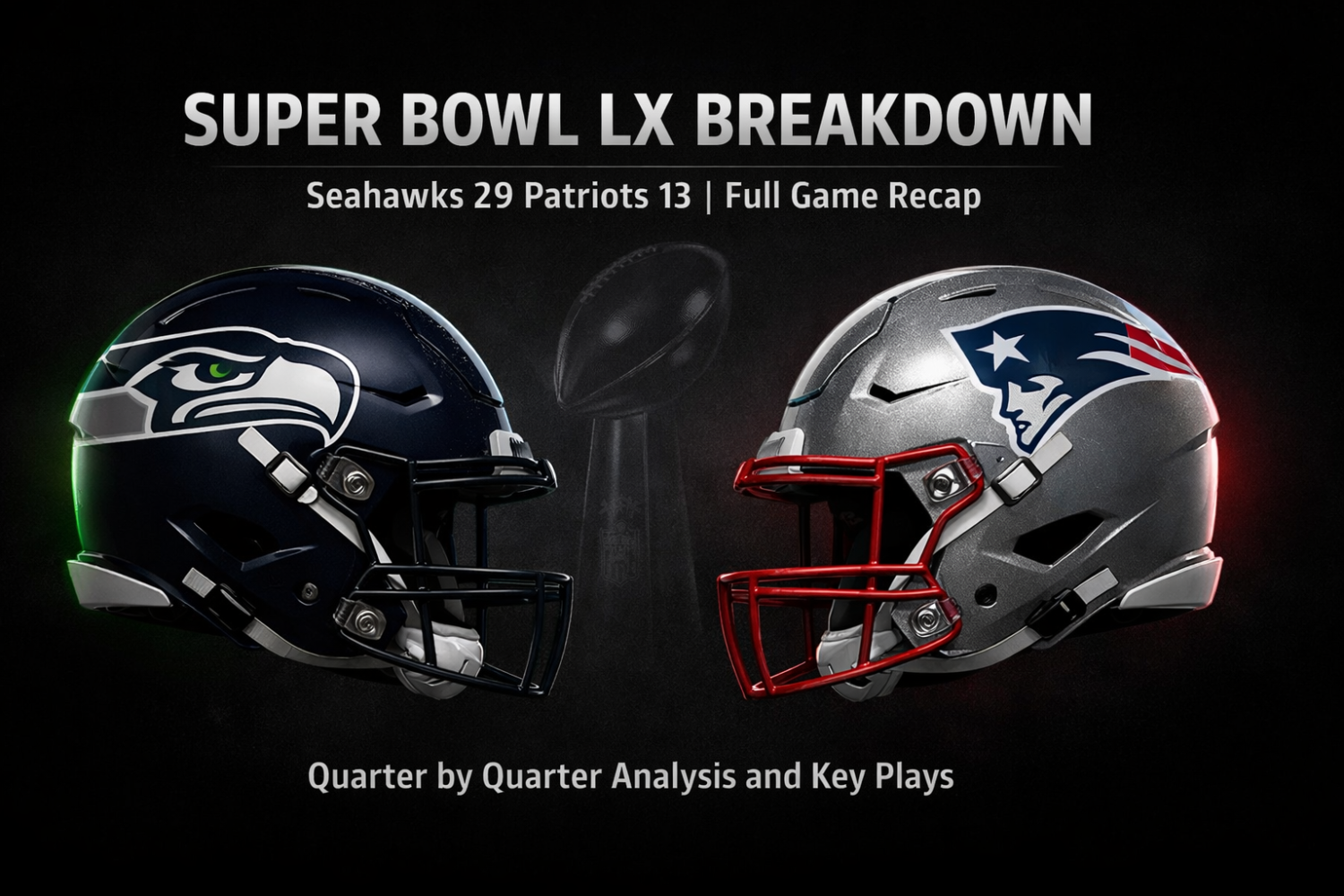
Super Bowl LX was not a spectacle built on fireworks or frantic momentum swings. It was a championship decided through structure, discipline, and accumulation. On February 8, 2026, at Levi’s Stadium in Santa Clara, California, the Seattle Seahawks defeated the New England Patriots 29 to 13 in a game that slowly tilted in one direction and never fully tipped back.
This was a Super Bowl defined by defense, special teams, and control of time and space. While the final margin reached sixteen points, the gap between the teams felt wider long before the fourth quarter arrived. From the opening drive through the final whistle, Seattle dictated how the game would be played.
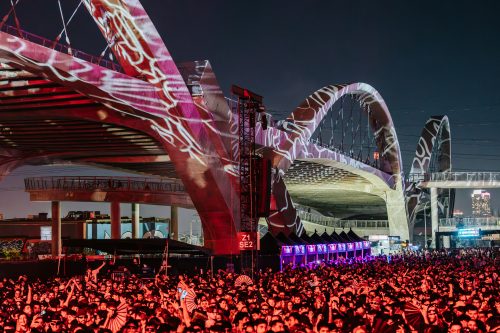
I caught the game in Los Angeles at the Catalyst Hawthorne dispenary and weed lounge, as part of Respect My Region’s watch party series. The event was hosted in collaboration with Dodi brands which is Marshawn Lynch’s cannabis brand.
First Quarter Seattle Dictates Tempo Early
Seattle opened the game with the ball and immediately established the identity that would define the night. The Seahawks leaned on Kenneth Walker III early, running behind a physical offensive line and keeping the Patriots defense on the field. Sam Darnold worked short throws and check downs, avoiding risk and allowing the offense to settle in.
The drive stalled just outside the red zone, but Jason Myers converted a 41 yard field goal to give Seattle a 3 to 0 lead. It was a small advantage, but it set the tone. Seattle was willing to take points and move on.
New England’s first possession never found rhythm. Drake Maye faced immediate pressure from Seattle’s front, including early hits that disrupted timing. A short completion followed by an incompletion set up third down, where pressure forced a throwaway. The Patriots punted.
Seattle responded with another extended drive that crossed midfield. Walker continued to find space between the tackles, and Darnold remained efficient. Again the drive stalled before the end zone, but Myers converted another field goal, extending the lead to 6 to 0.
By the end of the first quarter, Seattle had controlled possession, flipped field position, and forced New England into early adjustments.
End of First Quarter: Seahawks 6, Patriots 0
Second Quarter Defense and Field Position Take Over
The second quarter continued the same pattern, but the consequences for New England became more severe.
Seattle opened the quarter with a sustained drive that chewed clock and kept the Patriots defense on the field. Walker continued to generate consistent yardage, setting up manageable downs. The drive stalled near the red zone, but Myers converted his third field goal, pushing the lead to 9 to 0.
New England struggled to respond. Maye was pressured repeatedly, taking sacks and throwing under duress. Seattle’s secondary closed passing windows quickly and eliminated yards after the catch. A promising Patriots drive crossed midfield but ended after a sack forced a long third down and an incompletion.
Late in the half, New England attempted to pick up tempo, but penalties and pressure derailed the drive. Seattle closed the half by forcing another punt, sending both teams into halftime with the Patriots scoreless.
At the break, the scoreboard showed only a nine point gap, but the flow of the game suggested a much steeper climb ahead for New England.
Halftime Score: Seahawks 9, Patriots 0
Third Quarter Patriots Cannot Flip Momentum
The third quarter represented New England’s best opportunity to reset. Instead, Seattle reinforced control.
Seattle received the second half kickoff and immediately returned to the ground game. Walker broke off multiple chunk runs, moving the chains and keeping the Patriots defense on its heels. The drive ended inside Patriots territory, and Myers converted his fourth field goal to extend the lead to 12 to 0.
New England followed with one of its most effective drives of the night. Maye connected on short throws and extended a play with his legs to move into scoring range. However, Seattle’s defense tightened inside the red zone. A third down incompletion forced a field goal attempt that failed to change the scoreboard.
Midway through the quarter, a key moment arrived when Seattle’s pass rush forced a turnover deep in Patriots territory. While the Seahawks did not immediately turn the takeaway into points, the possession drained clock and reinforced field position.
By the end of the third quarter, the Patriots remained scoreless, and the margin felt larger than twelve points due to Seattle’s command of pace and possession.
End of Third Quarter: Seahawks 12, Patriots 0
Fourth Quarter Separation Arrives
The fourth quarter delivered the plays that turned control into separation.
Seattle opened the quarter with its most complete offensive drive of the game. Walker continued to punish the interior defense, forcing New England to commit additional defenders to the box. Darnold used play action to find space in coverage and eventually connected with tight end AJ Barner for the game’s first touchdown.
The score moved to 19 to 0 and shifted urgency fully to New England.
The Patriots finally responded with a quick scoring drive. Maye pushed the ball downfield and found Mack Hollins for a touchdown, cutting the deficit to 19 to 7 and briefly changing the tone.
Seattle answered immediately. Another long drive ended with Myers converting his fifth field goal, extending the lead to 22 to 7 and restoring distance.
Moments later, the decisive play arrived. Under pressure, Maye threw into coverage and the pass was intercepted and returned 45 yards for a touchdown. The score moved to 29 to 7 and effectively ended the contest.
New England added a late touchdown against softer coverage to bring the final score to 29 to 13, but the outcome had long been decided.
Final Score: Seahawks 29, Patriots 13
What Decided Super Bowl LX
Super Bowl LX was not won through explosive offense. It was won through accumulation.
Seattle controlled:
- Possession across all four quarters
- Field position through special teams
- Pace by limiting risk
- Momentum by forcing New England to chase points
Jason Myers finished with five field goals, setting a Super Bowl record and ensuring every stalled drive still produced points. Kenneth Walker III rushed for 135 yards on 27 carries and was named Super Bowl MVP, becoming the first running back to earn the honor in decades.
Seattle’s defense recorded multiple sacks, forced turnovers, and held New England scoreless through three quarters. Drake Maye finished with respectable yardage, but constant pressure and early deficits prevented rhythm from ever developing.
Super Bowl LX reinforced a reality often overlooked in modern football coverage. Championship games are still won through structure, discipline, and patience.
Seattle did not chase highlights. They collected advantages.
New England never recovered from a scoreless first half, and by the time urgency arrived, the game had already moved beyond reach.
This was a Super Bowl that rewarded preparation over spectacle and control over chaos.
And by the end of the night, the result reflected exactly that.
Congratulations to the Seahawks for winning Super Bowl LX!