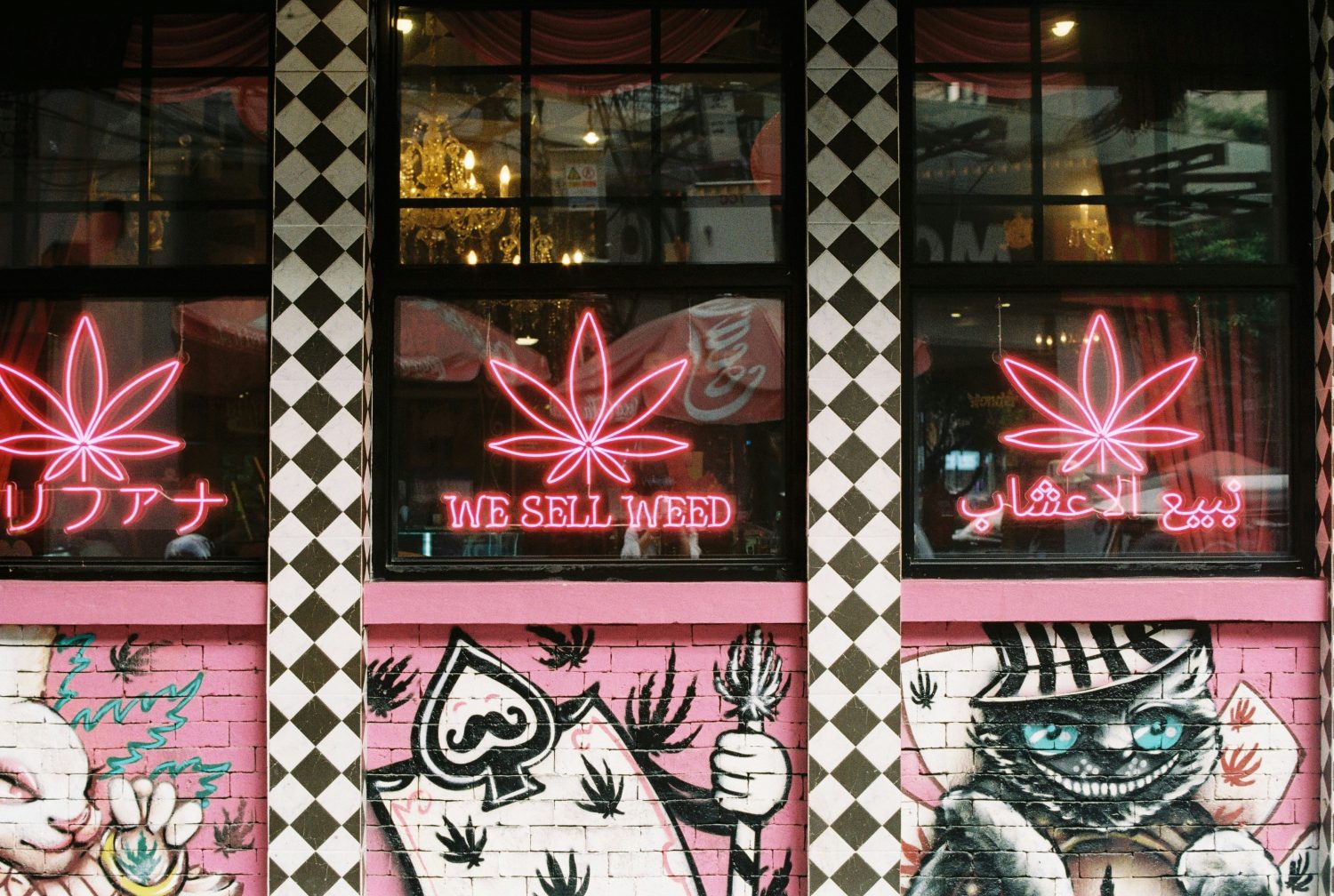
Cannabis in Thailand has gone through one of the fastest legal evolutions in the modern global cannabis movement. In just a few years, the country shifted from strict narcotics enforcement to decriminalization, then to a booming commercial phase, and now into a heavily regulated medical framework that has reshaped the entire industry.
If you’ve been casually following headlines, you probably still think Thailand is the first Asian country where recreational cannabis is freely legal. That was the perception in 2022 and 2023. That is not the reality in 2026.
Today, cannabis in Thailand exists inside a medical-only structure with strict controls, shrinking retail access, and active enforcement against casual recreational sales. Thousands of dispensaries have closed. Tourism-driven cannabis culture has cooled. The political tone has shifted from expansion to regulation.
How Cannabis in Thailand Became Legal
For decades, cannabis was classified as a narcotic in Thailand under some of the toughest drug laws in Southeast Asia. Possession could mean prison time. The stigma was real and enforcement was serious.
The first major shift came in 2018 when Thailand legalized medical cannabis. This positioned the country as the first in Southeast Asia to allow regulated therapeutic use. At that time, access was limited and tightly controlled through approved medical channels.
The real shockwave happened on June 9, 2022.
Thailand removed cannabis from the narcotics list. The flowering bud was no longer categorized as a narcotic substance. While this was not technically full recreational legalization, it functioned like decriminalization in practice. The plant was legal to grow with registration. Shops began selling flower. Cafes experimented with infused products. Farmers were encouraged to cultivate.
Cannabis in Thailand instantly became global news.
The Boom Years: 2022 to 2024
Once cannabis was removed from the narcotics list, the market exploded.
Dispensaries opened across Bangkok, Phuket, Chiang Mai, Pattaya, and tourist beach towns. Within months, thousands of retail shops were operating nationwide. Tourists walked into stores and purchased flower without meaningful resistance. Social media amplified the narrative that Thailand was now the Amsterdam of Asia.
But here’s what was happening beneath the surface.
There was no comprehensive recreational cannabis law passed through parliament. Instead, cannabis existed in a gray zone. It was decriminalized, but regulations governing retail structure, marketing, and medical oversight were incomplete.
Some shops operated professionally with lab testing and compliance measures. Others operated loosely. THC limits were inconsistently enforced. Medical prescription requirements were technically part of the framework, but not always followed.
It felt like a green rush.
And like every green rush, it created political friction.
The Political Shift and 2025 Crackdown
By 2024 and early 2025, concerns started growing within Thailand’s political leadership.
Issues raised publicly included youth access, visible public consumption, “weed tourism” optics, and social order. Opposition parties began criticizing the rollout of cannabis reform as rushed and insufficiently controlled.
In mid-2025, the government introduced new regulations that dramatically reshaped cannabis in Thailand.
Cannabis flower was reclassified as a controlled herb under public health and traditional medicine laws. Sales were restricted to medical use only. A valid prescription from a licensed practitioner became mandatory for legal purchase. Advertising and overt promotion were prohibited.
This was not a full return to narcotics criminalization, but it was a clear pivot away from casual recreational access.
The impact was immediate.
More than 7,000 cannabis shops chose not to renew licenses or were unable to meet the new requirements and closed by early 2026. The open-dispensary boom effectively ended.
Cannabis in Thailand in 2026: What Is Legal Now
As of February 21, 2026, cannabis in Thailand operates under a medical-only model with strict oversight.
Here is what that means in practical terms.
Cannabis is not listed as a narcotic. Possession is not automatically a narcotics crime. However, legal purchase requires a valid medical prescription from a licensed doctor, dentist, pharmacist, or traditional medicine practitioner.
Dispensaries must function as medical outlets and document patient information. Casual over-the-counter recreational sales are not legally supported.
Public smoking remains illegal under public nuisance and health laws. This was always the case, even during the boom phase, and enforcement has become more consistent.
Advertising cannabis products is restricted. Promotional branding tied to recreational lifestyle messaging is discouraged or prohibited.
The result is a far more controlled market than what international media initially portrayed.
What Tourists Need to Understand
The question most people still ask is simple: can tourists legally buy cannabis in Thailand?
The answer is no, not casually.
Tourists may obtain cannabis legally only if they go through a medical consultation process with a licensed Thai practitioner and receive documentation. That is the compliant pathway.
Walking into a random shop and buying flower without a prescription is no longer part of the legally supported framework.
Public consumption remains illegal. Smoking on beaches, sidewalks, or in visible public areas can result in fines.
Travelers bringing cannabis into or out of Thailand face severe legal consequences. Exporting or importing cannabis products remains strictly prohibited.
The idea of Thailand as a free recreational cannabis playground is outdated.
The Current Business Landscape
Cannabis in Thailand is now in a consolidation phase.
During the boom years, rapid expansion led to oversupply. Retail density skyrocketed. Margins shrank. Many operators were undercapitalized and relying on tourism hype rather than sustainable medical infrastructure.
Once the 2025 regulatory tightening took effect, weaker operators exited quickly.
The shops that remain are those aligned with medical documentation, compliance requirements, and supply chain traceability. The business focus has shifted from lifestyle branding to regulated patient services.
Growers must register cultivation and comply with oversight standards. Medical positioning now drives demand, not recreational tourism marketing.
This is a very different industry than what existed in 2023.
Cultural Context Matters
Thailand’s cannabis journey is deeply tied to culture and politics.
Historically, cannabis was used in traditional Thai medicine before modern narcotics laws criminalized it in the 20th century. That historical connection was one reason reform gained traction.
At the same time, Thailand remains socially conservative in many respects. Visible intoxication, public disorder, and youth exposure are sensitive issues.
The regulatory pivot in 2025 reflects that tension.
Cannabis reform in Thailand was never framed purely as a recreational freedom movement. It was positioned as medical reform and agricultural opportunity. Once public perception shifted toward recreational excess, political pressure followed.
That dynamic explains why cannabis in Thailand today is controlled rather than expanding.
Comparing Thailand to the United States
It’s important not to compare Thailand’s cannabis framework directly to U.S. state markets like California, Michigan, or Nevada.
In the United States, recreational cannabis is codified by state law with licensing structures, tax frameworks, and regulatory agencies clearly defined.
In Thailand, cannabis was decriminalized before a comprehensive recreational law was finalized. That created the boom phase. The government then recalibrated toward medical-only structure without fully reversing decriminalization.
The result is a hybrid model that is more restrictive than many U.S. recreational markets.
What Happens Next
The future of cannabis in Thailand will likely remain centered on medical use and regulatory control.
Potential developments could include clearer national legislation defining medical pathways, stronger enforcement mechanisms, expanded traditional medicine integration, and continued limits on recreational framing.
A full return to narcotics criminalization seems unlikely in the near term. However, broad recreational legalization also appears politically improbable under current leadership.
Thailand’s cannabis experiment shows how fast policy can move when public health, politics, and economics intersect.
Cannabis in Thailand is no longer the wild west story that dominated headlines in 2022 and 2023.
It is now a regulated medical system with documentation requirements, strict retail oversight, limited advertising, and active enforcement against casual recreational sales.
More than 7,000 shops have closed. Public smoking remains illegal. Medical prescriptions are required for lawful purchase.
For travelers, investors, and cannabis observers, the takeaway is simple: the landscape has matured, contracted, and tightened.
Thailand still holds a historic place as the first Asian country to decriminalize cannabis. But in 2026, cannabis in Thailand is defined by compliance, control, and political recalibration — not recreational freedom.
–
Cannabis in Thailand FAQ
Is cannabis legal in Thailand in 2026?
Cannabis in Thailand is legal only within a regulated medical framework. It is no longer classified as a narcotic, but legal purchase requires a valid medical prescription from a licensed Thai practitioner. Recreational sales are not legally supported under current regulations.
Can tourists legally buy cannabis in Thailand?
Tourists can only legally obtain cannabis in Thailand by going through a medical consultation and receiving a valid prescription from a licensed Thai medical professional. Casual over-the-counter recreational purchases without documentation are not compliant with current law.
Is recreational cannabis legal in Thailand?
Recreational cannabis is not formally legalized in Thailand. While cannabis was decriminalized in 2022, regulatory changes in 2025 shifted the framework to medical-only access. Recreational use without a prescription is not supported under the current legal structure.
Do you need a prescription to buy cannabis in Thailand?
Yes. As of 2026, a prescription from a licensed doctor, pharmacist, dentist, or approved traditional medicine practitioner is required to legally purchase cannabis in Thailand.
Can you smoke cannabis in public in Thailand?
No. Public smoking of cannabis is illegal in Thailand and can result in fines under public health and nuisance laws. Consumption should only occur in legally permitted private spaces.
How many cannabis dispensaries are operating in Thailand?
After the initial boom following decriminalization in 2022, more than 7,000 cannabis shops closed following stricter regulations introduced in 2025. The remaining dispensaries operate under tighter medical compliance standards.
What happened to the cannabis boom in Thailand?
The cannabis boom between 2022 and 2024 was driven by decriminalization and rapid dispensary expansion. In 2025, the government introduced stricter regulations requiring medical prescriptions and compliance oversight, leading to widespread shop closures and industry consolidation.
Can you bring cannabis into or out of Thailand?
No. Importing or exporting cannabis products remains illegal and can result in severe legal consequences. Travelers should never attempt to transport cannabis across Thai borders.
Is CBD legal in Thailand?
CBD products with low THC content may be legal under specific regulations, but they are still subject to oversight and compliance requirements. Consumers should purchase only from licensed outlets and verify product legality.
Why did Thailand tighten its cannabis laws?
Political pressure, concerns about youth access, public consumption, and the rapid growth of cannabis tourism contributed to the government’s decision in 2025 to tighten regulations and restrict cannabis to medical use only.
Is Thailand still considered cannabis-friendly?
Thailand remains progressive compared to much of Asia because cannabis is not classified as a narcotic. However, it is no longer considered a recreational cannabis destination. Access is medical, regulated, and controlled.
What is the future of cannabis in Thailand?
The future of cannabis in Thailand is likely to remain focused on medical use, regulatory oversight, and compliance-driven business operations rather than open recreational legalization.