The traveling circus passed through the Midwest this week, leaving behind three arenas full of memories and a Gorillaz-sized hole that only Damon Albarn & Co. can close on their next visit.
On Tuesday, they played Cleveland for the first time in the project’s nearly three-decade history. Over the next two nights, The Mountain Tour continued moving westward with stops in Detroit and Chicago. Deltron 3030 opened each show as they have for most of the North American dates, setting the stage for an evening that gradually expanded from underground hip-hop into a sprawling, genre-defying spectacle.
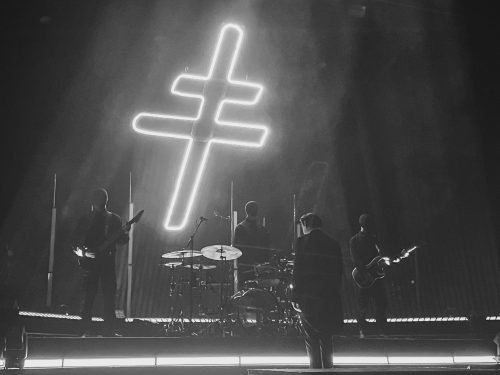
“We grew up together,” Dan the Automator told the audience at Motor City’s Little Caesars Arena on Wednesday. “Our whole legacy is intertwined.”
Deltron 3030 and Gorillaz are essentially parallel expressions of the same creative philosophy, both built on the idea that categories are far more captivating when dismantled. The former pulls musicians from outside hip-hop into its orbit while the latter functions as an open-ended host, inviting artists from every conceivable background into its ever-expanding universe.
Dan the Automator produced Gorillaz’s self-titled debut in 2001, while Del the Funky Homosapien helped establish the cartoon outfit with two of their earliest hits in “Clint Eastwood” and “Rock the House.” Seeing them share the stage again after all these years feels like a conversation that never really ended rather than a trip down memory lane.
With Gorillaz still well in motion, it’s reassuring to know that their contemporaries from the Bay Area are refusing to resign themselves to legacy-act status. In fact, the trio even used their set to preview “Centuries,” a collaboration with Death Cab for Cutie’s Ben Gibbard from their next album that’s set to drop next year.
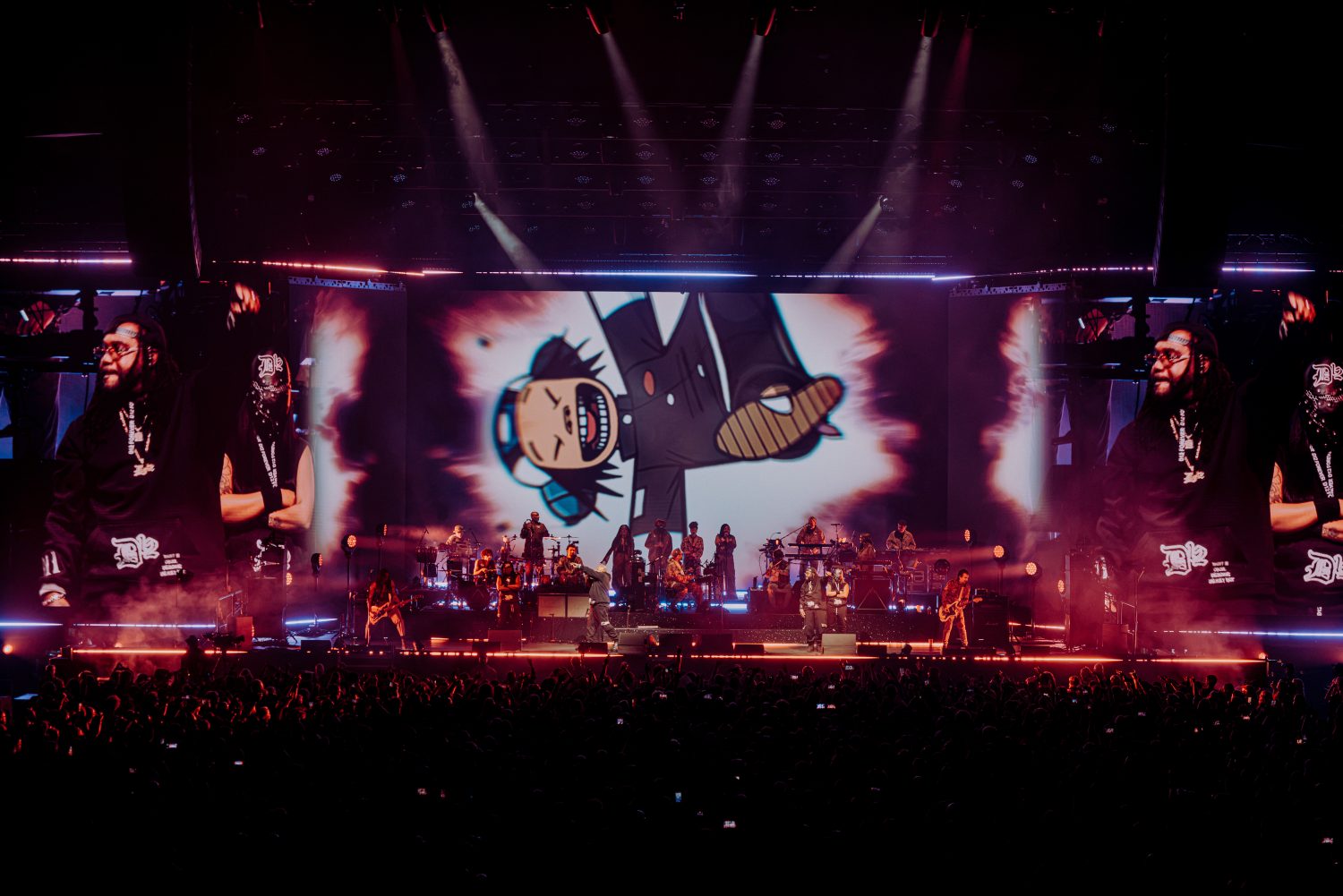
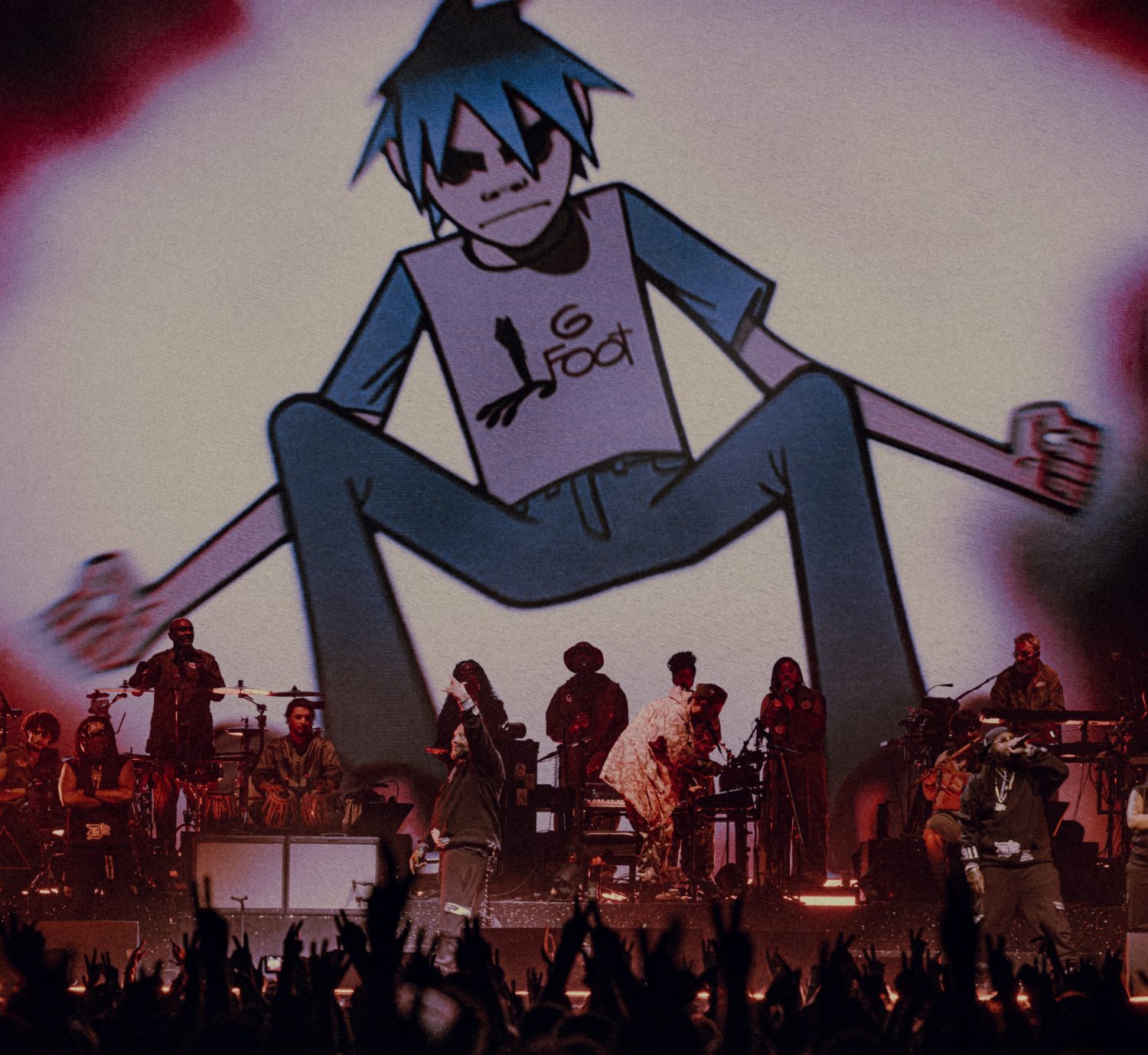
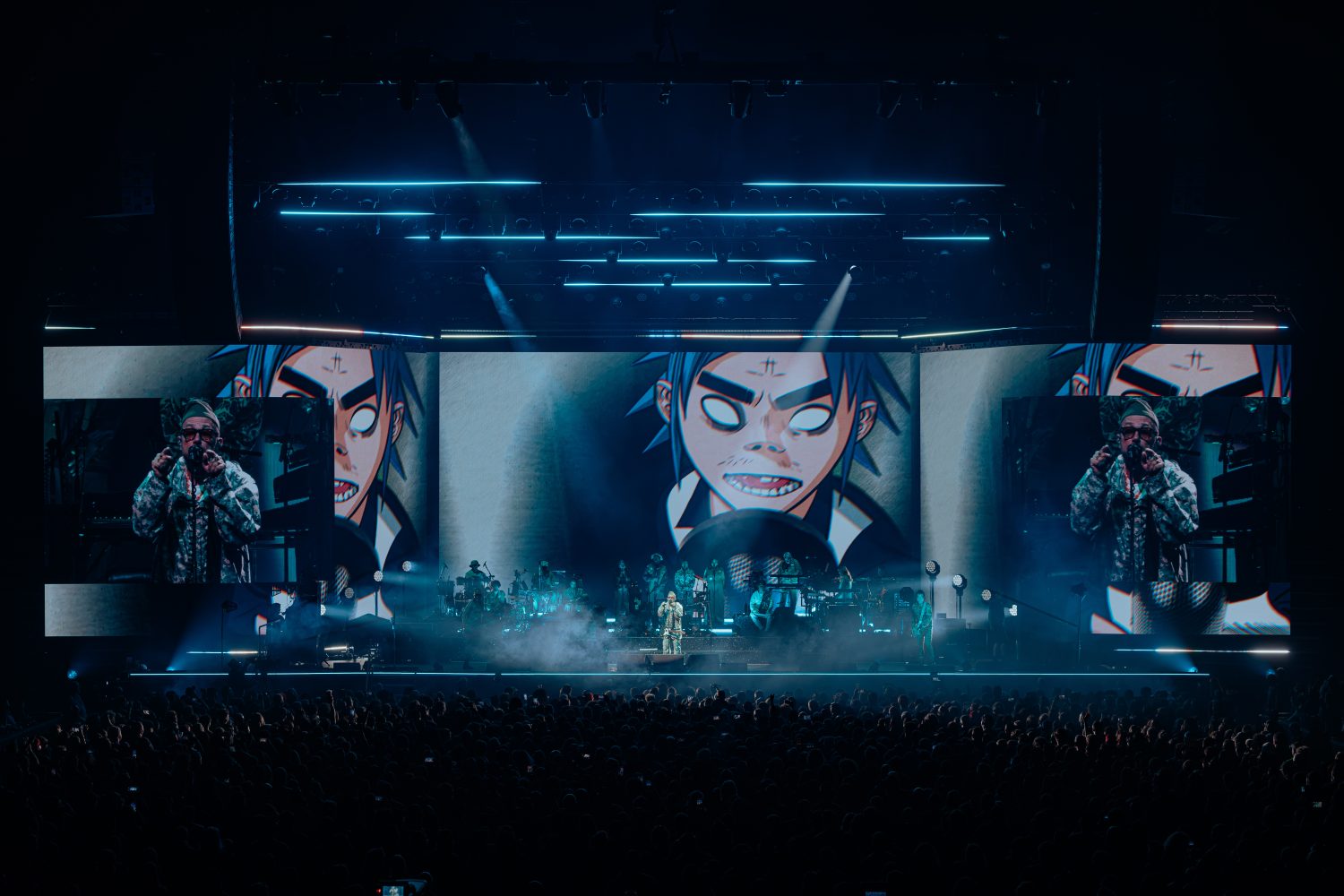
The evening had already established a remarkably coherent identity for a bill spanning so many musical traditions by the time Albarn and his camo-clad touring ensemble took the stage, and “The Mountain” opening theme made that ambition palpable. Opening each performance with Indian classical music was a statement of intent, bringing sounds rarely afforded such space in large American venues into the center of the spectacle. Hearing those textures reverberate through packed arenas in the Midwest would have seemed highly unlikely not that long ago, yet Gorillaz have made it part of the itinerary without reducing the tradition to exotic decoration.
For all the visual wizardry, though, the production’s purest attraction was witnessing the man behind it all wholeheartedly enjoy himself. Albarn repeatedly made his way to the floor to meet fans and sign autographs while singing, visibly losing himself in the crowd during a fit of half-serious passion as he shouted the chorus of “Last Living Souls.” That enthusiasm also helped compensate for the inevitable changes in his delivery at 58. His voice no longer carries the elasticity of his Britpop years, though he still finds moments to push it toward its limits.
“On Melancholy Hill” remains one of those occasions when he reaches toward the upper limits of his register, preserving the song’s fragile tenderness even as the effort becomes more apparent. On the other hand, “Feel Good Inc.” has curiously remained Albarn’s most enduring adversary for reasons that continue to elude modern science. It’s a hilariously mundane shortcoming for the architect of modern music’s most elaborate fictional universe, especially since the song hardly demands vocal acrobatics. At this point, his wayward delivery is so consistent that it’s becoming difficult to tell whether he’s genuinely struggling or simply committed to the bit.
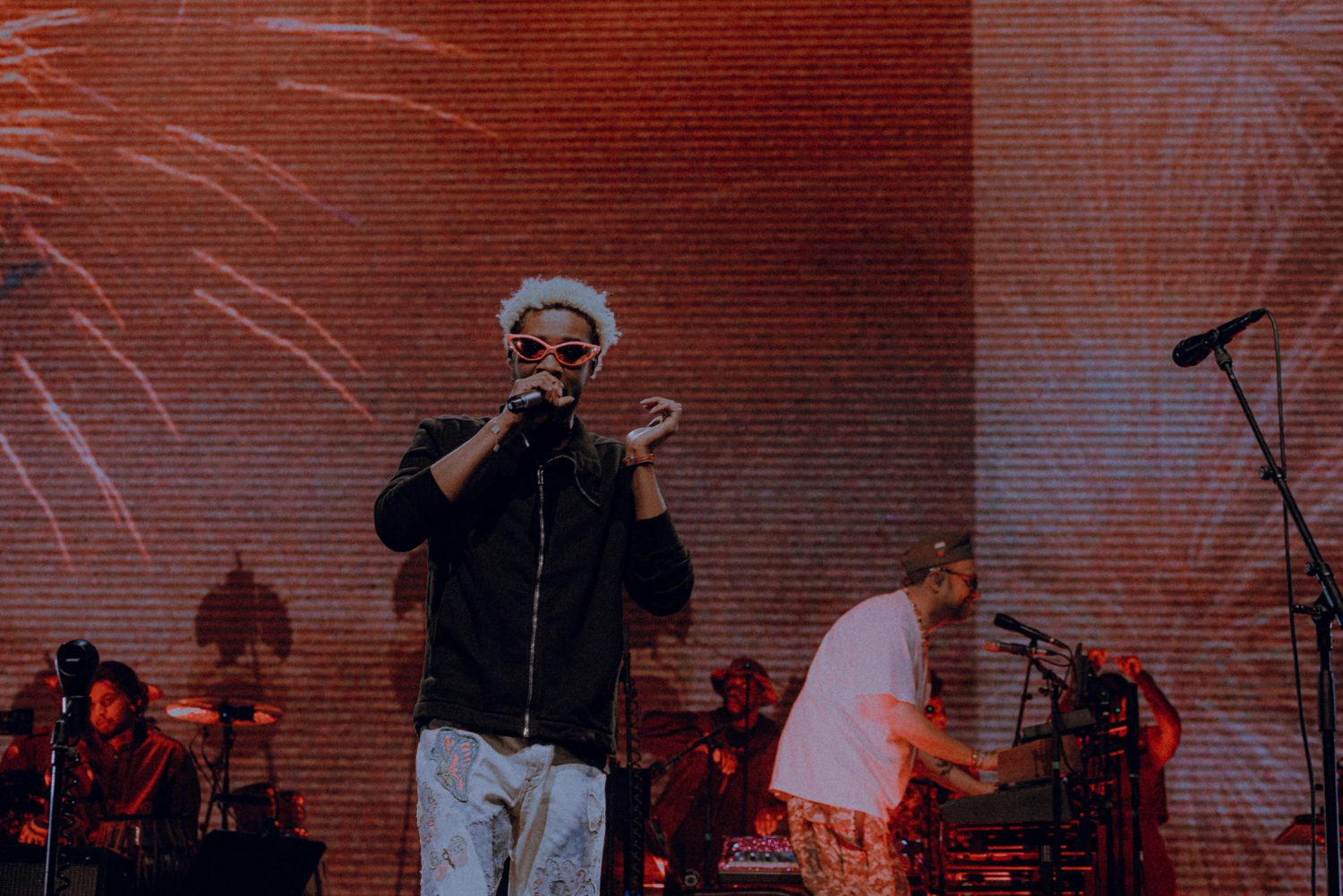
Of course, the most exciting part of a Gorillaz concert is that nobody knows for certain who will grace the stage next. Think Coachella condensed into a single arena, except the surprise appearances are woven into one sprawling performance.
Detroit brought that principle to life through a convergence of musical histories stretching back to Gorillaz’s earliest days, with Albarn even taking a moment to acknowledge the city’s broader cultural significance by describing it as the birthplace of music as we know it today.
Danny Brown’s cameo for “Submission” broke from the tour’s nightly itinerary, reviving a Humanz gemstone he hadn’t performed with Gorillaz since he toured with them a decade back. The encore reached even further into the past when Kuniva and Swifty McVay of D12 popped out for “911,” a deep cut that last graced the stage in 2002. The reunion carried a deeper significance given The Mountain’s preoccupation with mortality and the afterlife, especially since the band prefaced their guest spot with a tribute to Proof by playing his posthumous section from “The Manifesto” to create what is arguably the Detroitest of moments this year.
Detroit wasn’t the only musical capital to leave its fingerprints on the setlist, with Chicago supplying its own cast of local talent the following night. Peven Everett took the stage to assist with “Strobelite” and “Stylo,” while house music veteran Jamie Principle launched the tour debut of “Hollywood.” Later, the Hypnotic Brass Ensemble stepped in to add another layer of texture with live renditions of “Broken” and “Plastic Beach.” Instead of just switching up the scenery, Albarn gave each performance a distinct character by drawing from the musical heritage of its surroundings.
That is what separates Gorillaz from other acts capable of assembling an impressive guest list. Albarn’s greatest strength as a bandleader may be his willingness to relinquish the spotlight, affording musicians from wildly different backgrounds the freedom to remain themselves while serving a collective vision. Ultimately, his stage becomes a meeting place where all those voices are able to coexist without having to agree on a common musical language.
More than 25 years into the experiment, Gorillaz have accumulated enough history to become their own institution. Yet, Albarn refuses to settle down, carrying old friendships into unfamiliar territory and making room for new ones along the way. The cartoon band has grown older, its ringmaster’s voice has weathered and the cast has changed considerably, but the central attraction remains intact: a troupe that has mastered the act of making the familiar unpredictable all over again.
Gorillaz in Detroit